Why use construction takeoff software?
Why construction estimators use takeoff software: fewer scale errors and missed addenda, faster bids, and structured quantities that flow into your cost workbook.

A single wrong scale setting can poison an entire estimate. Set the page to the wrong dimension, trace a hundred sheets, and every wall length, slab area, and fixture count is off by the same factor before pricing even starts. That is the kind of error takeoff software exists to catch, alongside the ones that hurt most on bid day: a sheet that never got counted, a shared wall tallied twice, an addendum that revised a footprint nobody re-measured.
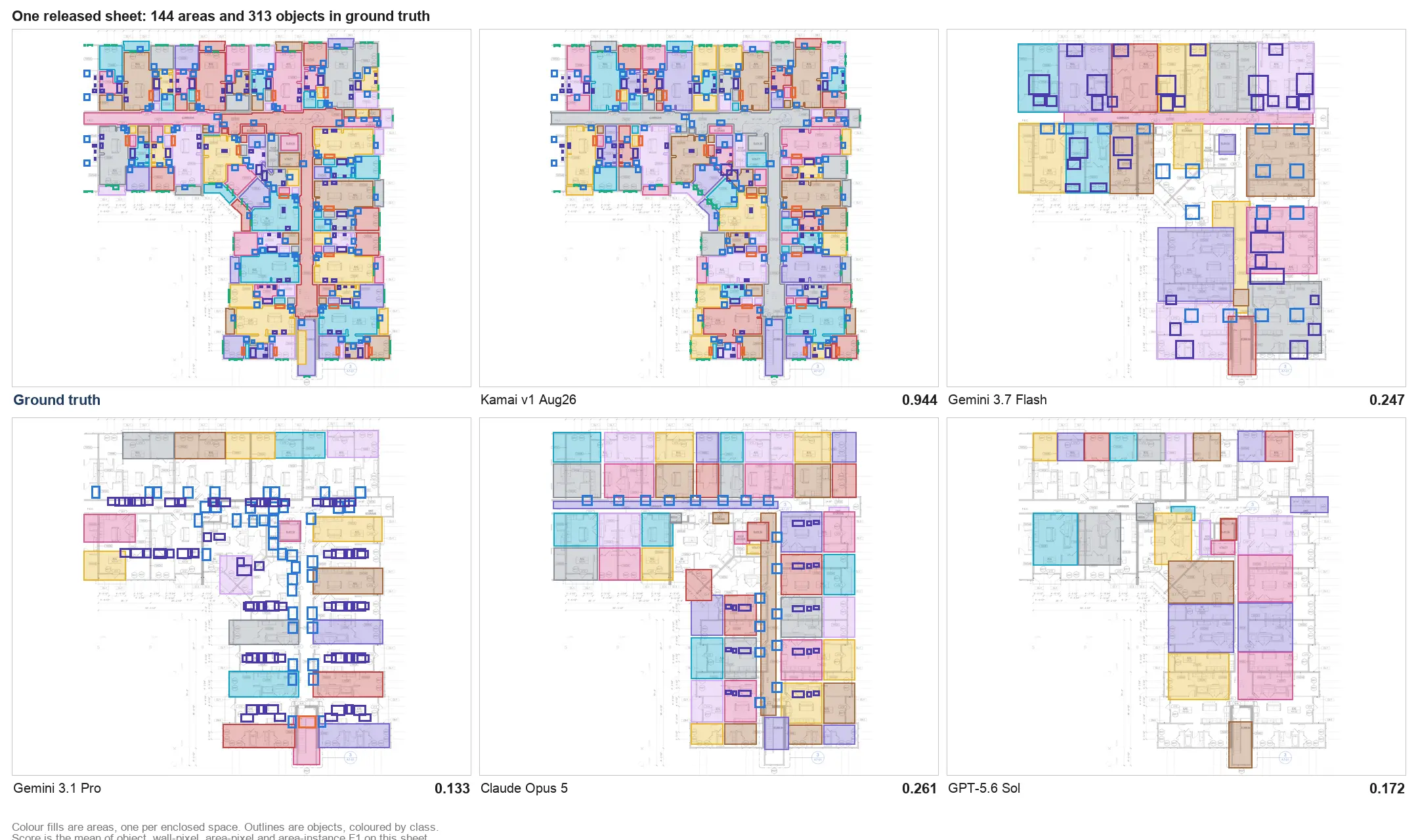
Takeoff software lets estimators measure and quantify materials directly from digital plans instead of scaling printed drawings or eyeballing static PDFs. Kamai goes a step further. Its models read the drawing set and turn architectural, structural, and MEP sheets into structured, review-ready quantities, so you spend your time checking numbers rather than producing them from scratch.
What construction takeoff software actually does
At its core, takeoff software replaces the ruler-and-spreadsheet workflow. You load a plan set, define a scale once, and measure linear feet, square footage, and counts that feed straight into quantities. No re-keying dimensions, no parallel tally sheet that drifts out of sync with the drawings.
Kamai changes where the work starts. Rather than asking you to trace every line, its models extract quantities from the drawing set and present them for review. You are correcting and confirming, not measuring page by page.
Fewer of the errors that blow up an estimate
Most takeoff mistakes are not exotic. They are wrong scale, a missed sheet, a counting slip on a long run of identical fixtures, or a revision buried in an addendum that never made it into the numbers. Each one is easy to make at 11 p.m. the night before a bid is due, and each one is invisible until the job is underway.
Pulling quantities directly from the plans removes most of the manual math and repetitive counting where those errors live. When the numbers trace back to the drawing instead of to a tired estimator's tally, you can bid them without bracing for a surprise during construction.
Hours back on every bid
Manual takeoff is where estimating time goes. Measuring walls, floors, ceilings, and fixtures across dozens or hundreds of pages can take days for a single project, and most of it is mechanical tracing.
Kamai compresses that. Quantities come out organized and ready to review, which is a different unit of work than starting from a blank measurement. The time you get back goes where it should: pricing analysis, vendor negotiations, and tightening the bid. That is also how you fit more bids into the same week, which is its own competitive edge in a market where the fast, accurate proposal usually wins the job.
One set of numbers the whole team trusts
A commercial project pulls in estimators, project managers, architects, subcontractors, and executives, and the fastest way to lose money is to have two of them working from different quantities. Centralizing takeoff data keeps everyone on the same numbers and the same documents.
In Kamai, people can review, verify, and adjust takeoffs in one place rather than passing around marked-up PDFs and conflicting spreadsheets. When a quantity changes, it changes for everyone, which is what keeps estimation and execution from drifting apart.
Cost control that starts at the takeoff
Budgets are only as good as the quantities under them. If you do not know exactly how much material a job needs, every downstream number is a guess.
Kamai produces structured quantity outputs you can use to analyze costs, compare supplier quotes line by line, and catch budget variances early. Knowing real material counts is what lets you avoid over-ordering, cut waste, and stop underestimation before it eats the margin. The control happens at procurement, but it depends on the takeoff being right first.
Reports and exports your stakeholders can read
Clients and subs expect documentation that backs up the estimate: itemized lists, summaries, and material breakdowns tied to the measured quantities. Kamai generates these from the takeoff data and exports to Excel and PDF, so handing a clean, defensible breakdown to a client or subcontractor is a click, not an afternoon of formatting.
Data that fits your existing workflow
Takeoff does not live alone. The quantities have to land in your budgeting, job-costing, and project-management tools, and retyping them by hand is both slow and a fresh source of errors.
Kamai exports structured quantity data in standard formats, including JSON, so it moves into the systems you already use without manual re-entry. That keeps preconstruction and execution working from the same figures instead of three slightly different copies.
Small remodels and large multi-trade jobs
A takeoff tool that only works on simple plans is not much use to a shop that bids both a single-family home and a multi-trade commercial build. Kamai handles detailed drawing sets and a range of trades, and you can shape the workflow to match how your team organizes quantities and divisions. That is what makes it possible to take on bigger, more complex work without rebuilding your process each time.
Ask the drawings a question
Kamai includes an AI assistant inside the app. You can ask it about the plan set or the extracted quantities and get an answer grounded in your actual project, which is faster than scrolling sheets to confirm a count or chase down where a number came from before you commit it to a bid.
The bottom line
Takeoff software stopped being optional for contractors who want to win competitive work. The case for it is concrete: catch the scale errors and missed addenda before they reach a client, hand back the hours estimators currently spend tracing, keep one set of trusted quantities across the team, and feed clean numbers straight into pricing and procurement. With Kamai's models doing the extraction, estimators spend less time measuring and more time judging whether the bid is right, which is the part that actually wins jobs.
Get the next post in your inbox.
Low frequency. High signal.