Is Takeoff Software Worth It for Small Construction Companies?
When one person runs estimating, purchasing, and the job site, the question isn't whether takeoff software is nice to have. It's whether it buys back enough time to win more work.

At a small shop, the estimator is also the owner, the buyer, the scheduler, and the person who answers the phone when a GC calls with a bid due Friday. There is no estimating department to hand the drawings to. There is one person and a stack of PDFs, and every hour spent measuring is an hour not spent on the next opportunity.
So the honest question is not whether takeoff software is impressive. It is whether it earns its keep for a team that bids a handful of jobs a month. The answer is yes, but not just because it is faster. The real payoff is that a small crew stops turning down work it has no time to price.
Why small teams feel this harder
A large contractor spreads preconstruction across specialists. A small one stacks it on a single desk. The same person reading the drawings is also pulling material pricing, walking the site, chasing subs, and sending invoices, so estimating gets whatever hours are left over.
Manual takeoff eats those hours fast. You open every sheet, measure the dimensions, count the fixtures, cross-check the schedules, and key each quantity into a spreadsheet. A big set can take a day, and the bid invitations keep landing while you do it. Every hour on the ruler is an hour not spent in front of a client.
What takeoff software is actually for
Takeoff software pulls priceable quantities out of drawings so you are not tracing them by hand. Digital tools replaced the scale ruler and the highlighter. AI tools go further: they read the drawing, recognize the elements, and hand back organized quantities ready for estimating.
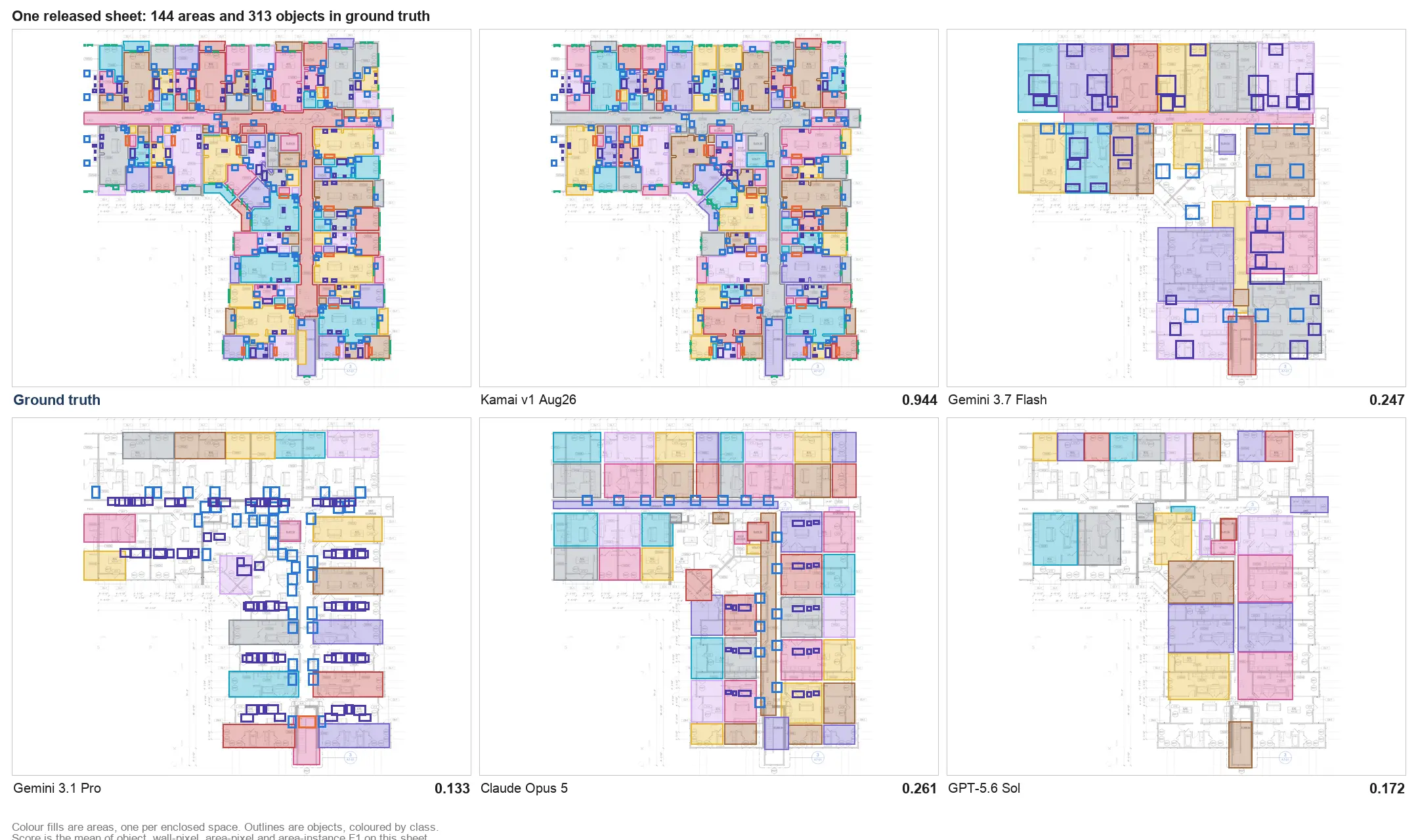
Kamai sits in that second group. It reads native vector geometry straight from PDF and CAD files, so it computes from the drawing's own coordinates rather than rasterizing the sheet into an image and guessing at pixels. Every quantity traces back to the source sheet and layer, so your time goes into shaping the bid instead of collecting measurements.
The cost of staying manual
Most small firms stick with manual takeoff because it is familiar and software feels like an expense they can skip. But the real costs are the ones that never show up on an invoice.
- It burns the estimating hours you cannot spare.
- It invites measurement slips and transcription errors across a long set.
- It makes every revision a re-count.
- It caps how many jobs you can realistically bid.
That last one is the real cost. When a takeoff takes too long, you decline the invitation, not because you would lose the job, but because there were not enough hours in the week to price it. The bids you never submit are the ones that hurt.
Speed is competitive, not cosmetic
Clients expect faster answers than they used to. A GC sends the same package to several subs at once, and the contractor who gets an accurate number back first is often the one in front.
Kamai shortens that timeline by automating the quantity extraction, so structured quantities move straight into your pricing instead of waiting on a manual count. Faster takeoffs mean faster estimates, and faster estimates mean more bids out the door.
Accuracy is where the margin lives
Winning is not the whole point. Winning profitable work is. On a small job, a small quantity error is not a rounding issue - it is your margin. Miss a flooring area, undercount fixtures, or measure the same wall twice, and the price is wrong before construction starts. Underestimate and you eat the difference. Overestimate and you were never in the running. Because Kamai extracts structured quantities directly from the drawing geometry, it removes a lot of the manual steps where those errors creep in.
A small firm cannot afford to be wrong on the numbers and cannot afford to be slow. It has to be both fast and right, which is exactly the combination manual takeoff makes hardest.
How Kamai differs from a digital ruler
Plenty of digital takeoff tools just swap the physical ruler for an on-screen one. The estimator still traces every condition by hand. The work did not get smaller. It moved to a mouse. Kamai instead reads the drawings and detects the measurable elements for you, so you review quantities and spend your attention where judgment matters.
From takeoff to estimate without rekeying
The hardest part of estimating is often not the measuring. It is moving numbers between systems, and copying quantities into a spreadsheet is another chance to fat-finger a figure on every line.
Kamai cuts most of that out. Extracted quantities flow into your estimating through structured exports or the API, whether you price in a custom spreadsheet or a dedicated platform. Your labor rates, material costs, supplier pricing, and markups all stay yours. Kamai's job is just to make sure the quantities land accurately.
Doing more without hiring more
Adding an estimator is not realistic for most growing shops. Budgets are tight, workload swings month to month, and experienced estimators are hard to find. Kamai adds estimating capacity without adding a head, letting one estimator move through more projects and spend the recovered hours reviewing bids and sharpening the price.
It works across the trades a small firm actually juggles - electrical, mechanical, plumbing, concrete, structural steel, wood framing, and interior finishes - with the same workflow every time, and it reaches past takeoffs into spec review, RFI and submittal work, and scope-of-work prep.
So, is it worth it
For a small contractor, efficiency is the competitive edge. Faster estimating lets you bid more work, accurate quantities keep costly mistakes off the job, and automating the repetitive part frees your one estimator to improve bids instead of measuring them.
Small firms do not need bigger teams to compete. They need smarter workflows. Accurate takeoffs are still the foundation of every estimate, and Kamai reads the drawings and hands back structured quantities ready to price. Upload a set in the app and see what a day of measuring turns into.
Frequently Asked Questions
Is takeoff software worth it for small construction companies?
Yes. It helps a small contractor estimate faster, cut manual errors, sharpen bid accuracy, and pursue more projects without hiring another estimator.
How does Kamai improve estimating?
It reads the drawings and extracts structured quantities automatically, so you move straight into pricing instead of measuring by hand or retyping numbers.
Can Kamai work with my existing estimating software?
Yes. The structured outputs drop into spreadsheets, estimating platforms, and the API, so you keep your own pricing systems.
Does Kamai support multiple trades?
Yes. It covers electrical, plumbing, mechanical, concrete, framing, structural steel, interior finishes, and more.
How does AI improve quantity takeoffs?
It identifies measurable elements directly from the drawing geometry, cutting manual measurement and transcription errors and keeping quantities consistent across a set.
Can Kamai help a small contractor win more jobs?
Yes. Less time on takeoffs and more accurate quantities let you respond faster and submit more competitive bids.
Get the next post in your inbox.
Low frequency. High signal.