Turn Blueprints Into Quantities Instantly with AI Takeoff Tools
How Kamai's AI reads PDF plan sets and returns review-ready quantities across trades, with exports straight into Excel and your estimating tools.

A bid set lands in your inbox at 4 p.m.: 140 sheets, architectural through MEP, with two addenda that moved a few walls and changed a slab spec. The clock to submit is short, and most of the next two days is going to be spent tracing those same walls, counting fixtures, and confirming the scale on every sheet before anyone gets to think about price.
That measuring step is the part Kamai automates. Upload the plan set as a PDF and Kamai's models read the drawings, pull quantities across trades, and hand back structured data you can review and price - without tracing a single line by hand.
Why manual takeoffs hold you back
The manual process is always the same shape. You open the set, zoom into the floor plans, trace walls and slabs, measure areas, work out volumes, and count fixtures. Then you go back through the notes, cross-reference the schedules, and re-confirm the scale, because one wrong scale setting on one sheet throws off everything downstream.
The failure modes are well known to anyone who has done this under deadline: a wall segment you skipped, shared walls counted twice, a revised detail you missed because the addendum came in after you started. None of them are exotic. They are just what happens when a person measures hundreds of pages by hand at speed.
There is also a hard ceiling on volume. If a job takes two days of measurement, the number of jobs you can chase in a quarter is capped by how many hours your estimators have, not by how many you could win. Measurement is where the bid cycle leaks the most time, so it is the right place to take time back.
How Kamai converts blueprints into quantities
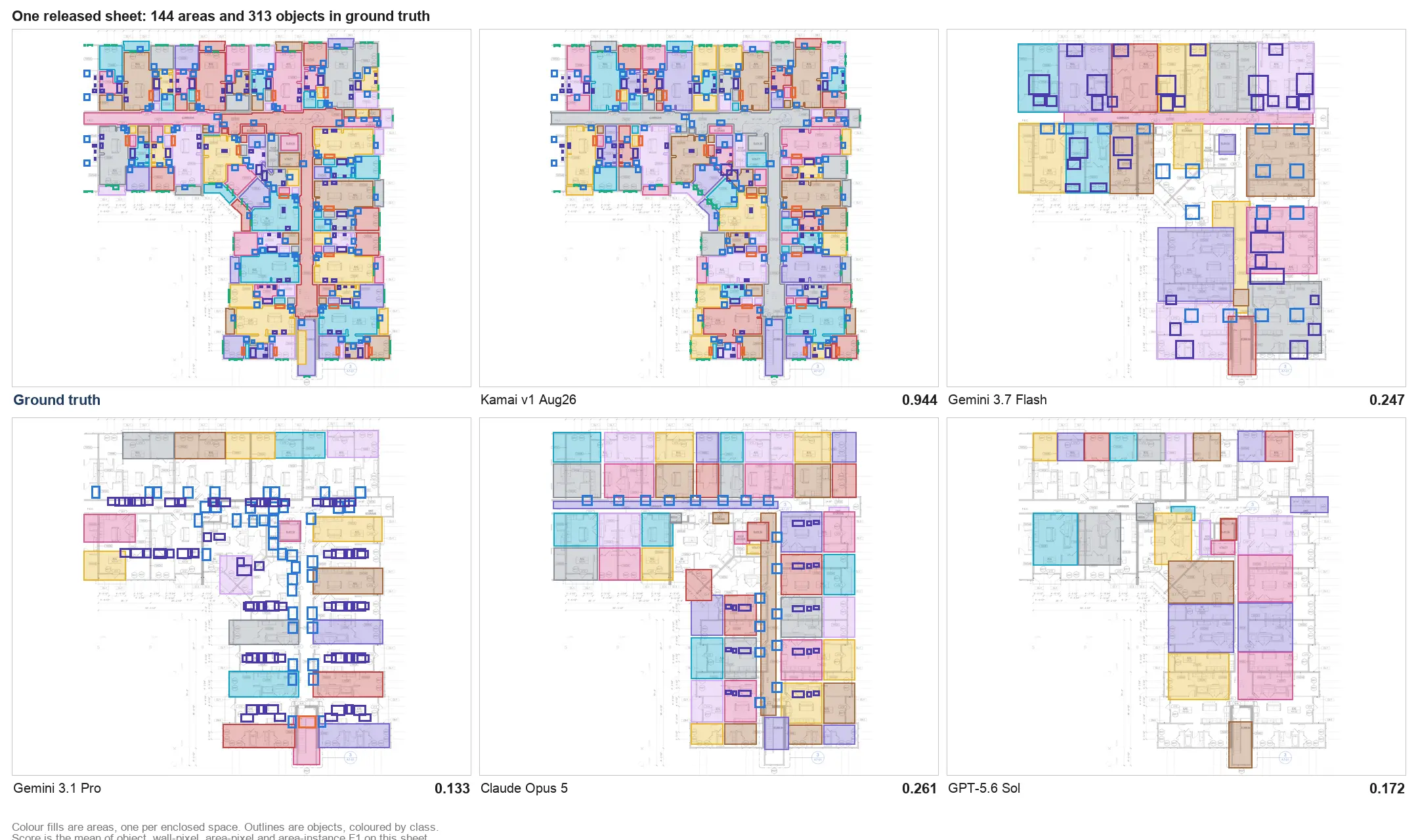
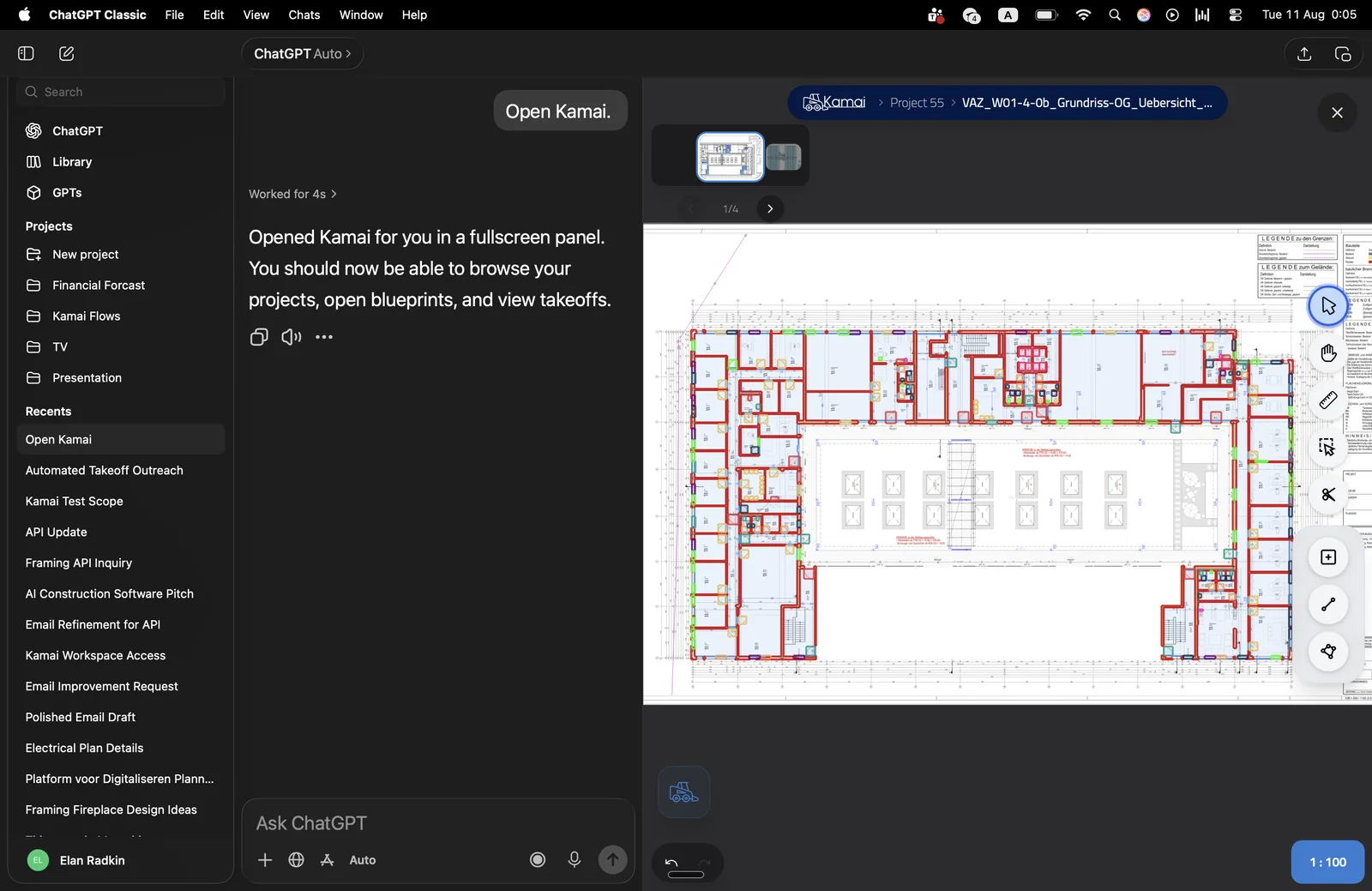
You upload the plan set; Kamai's models do the reading. Computer vision identifies the elements that matter across each trade - walls, slabs, fixtures, runs, counts - and returns areas and quantities organized as structured data rather than a flat list you have to retype.
The work that used to fill an afternoon becomes a review pass. Instead of generating the numbers from scratch, your estimators start from a populated takeoff and spend their attention checking it: confirming the model caught the addendum revisions, spot-checking the busy MEP sheets, adjusting anything that needs a human call. You stay in control of the output. You just no longer build it line by line.
Where the reclaimed hours go
Teams routinely spend 15 to 20 hours a week on manual takeoffs. Pull most of that back and the question becomes what to do with it. The honest answer is that the strategic parts of estimating - the parts that actually move win rate - are the parts that get squeezed when measurement eats the week:
- Refining cost strategy and pricing assumptions
- Negotiating with vendors and chasing better quotes
- Tightening bid accuracy on the line items that carry real risk
- Putting out more proposals
That last one compounds. When a takeoff is a review pass instead of a two-day build, the same team can bid noticeably more work without adding headcount. Hiring and training another estimator is slow and expensive; getting more out of the estimators you have is neither.
Accuracy starts from a better baseline
Consistency is where automation helps most. A person measuring 140 sheets will not apply the exact same judgment to sheet 5 and sheet 130 at the end of a long day. Kamai applies the same reading to every sheet, which strips out the variability behind most manual errors - the skipped segment, the double-counted shared wall, the fixture missed in a dense plan.
Quantities come back structured and grouped for review, so estimators are checking a reliable starting point rather than reconstructing one. Catching a problem in review is cheap. Catching it after you have submitted an underbid is not.
Multi-trade sets, one pass
A real project runs several trades at once: structural steel, concrete, plumbing, HVAC, electrical, and finishes, each with its own sheets and its own quantities to pull. Kamai reads across those disciplines in the same pass instead of forcing you to segment the set by hand and run a separate workflow per trade. On large commercial and industrial sets, that is where the time actually goes, so that is where automating across trades pays off most.
Exports that drop into your estimate
A takeoff is only useful once it reaches your estimate, and re-keying quantities into a spreadsheet is its own source of transcription errors. Kamai exports results directly to Excel, PDF, and other standard formats your estimating tools already accept, so the quantities flow into bid prep without a copy-paste step in between.
If you want to interrogate the numbers before exporting, the AI assistant inside app.kamai.io lets you ask questions about the takeoff and adjust quantities in place. The structured output is also available over the API and through MCP, so teams that want the data feeding their own pricing models can pull it programmatically.
The takeaway
Manual takeoffs cap how much you can bid and concentrate the easiest mistakes in the busiest part of the cycle. Handing the measurement to Kamai's models turns that bottleneck into a review step: upload the PDF set, get structured quantities across trades, check them, and export straight into your estimate. The hours you get back are the hours you would rather spend on price.
Get the next post in your inbox.
Low frequency. High signal.