How Technology is Transforming the Role of Construction Estimating
How AI takeoff tools are reshaping what estimators do, moving them off manual tracing and onto scope, risk, and pricing decisions.

For most of the trade's history, an estimator's day was measured in linear feet traced and symbols counted. You opened a printed set hundreds of pages deep, set a scale, and worked the drawings sheet by sheet until you had concrete, steel, and drywall quantities you could price. The estimate was the foundation every later decision stood on, but producing it ate the week.
That work is moving off the estimator's desk. The judgment around it is not. What follows is how the job has changed, and what an estimator actually does now that the tracing is no longer the bottleneck.
What the manual process looked like
A traditional takeoff ran roughly like this:
- Review the architectural, structural, and MEP drawings
- Set the scale on each sheet and measure walls, floors, and assemblies by hand
- Tally concrete, steel, drywall, and the rest
- Estimate labor hours against the scope
- Type it all into a spreadsheet or estimating package
Done carefully, it produced a reliable number. It was also slow, and it failed in quiet ways. A sheet set to the wrong scale carried that error into every quantity on the page. A shared wall got counted twice. A fixture schedule got skimmed under deadline. Worse, any design change meant rerunning whole sections of the takeoff, so a single addenda round could push the bid back a day. Those limits capped how many bids a firm could chase, and estimating departments became the bottleneck the whole business waited on.
On-screen takeoff was a half step
Digital takeoff software was the first real break from paper. Estimators measured distances, areas, and volumes directly on the screen, kept drawings and cost databases in one place instead of in stacks on a desk, and let several people work the same job at once.
It helped, but the estimator was still doing the reading. You still traced the linework, interpreted the symbols, and pulled the quantities out by hand. As sets grew larger and more coordinated, that manual core stayed the constraint. Faster tracing is still tracing.
What AI changed
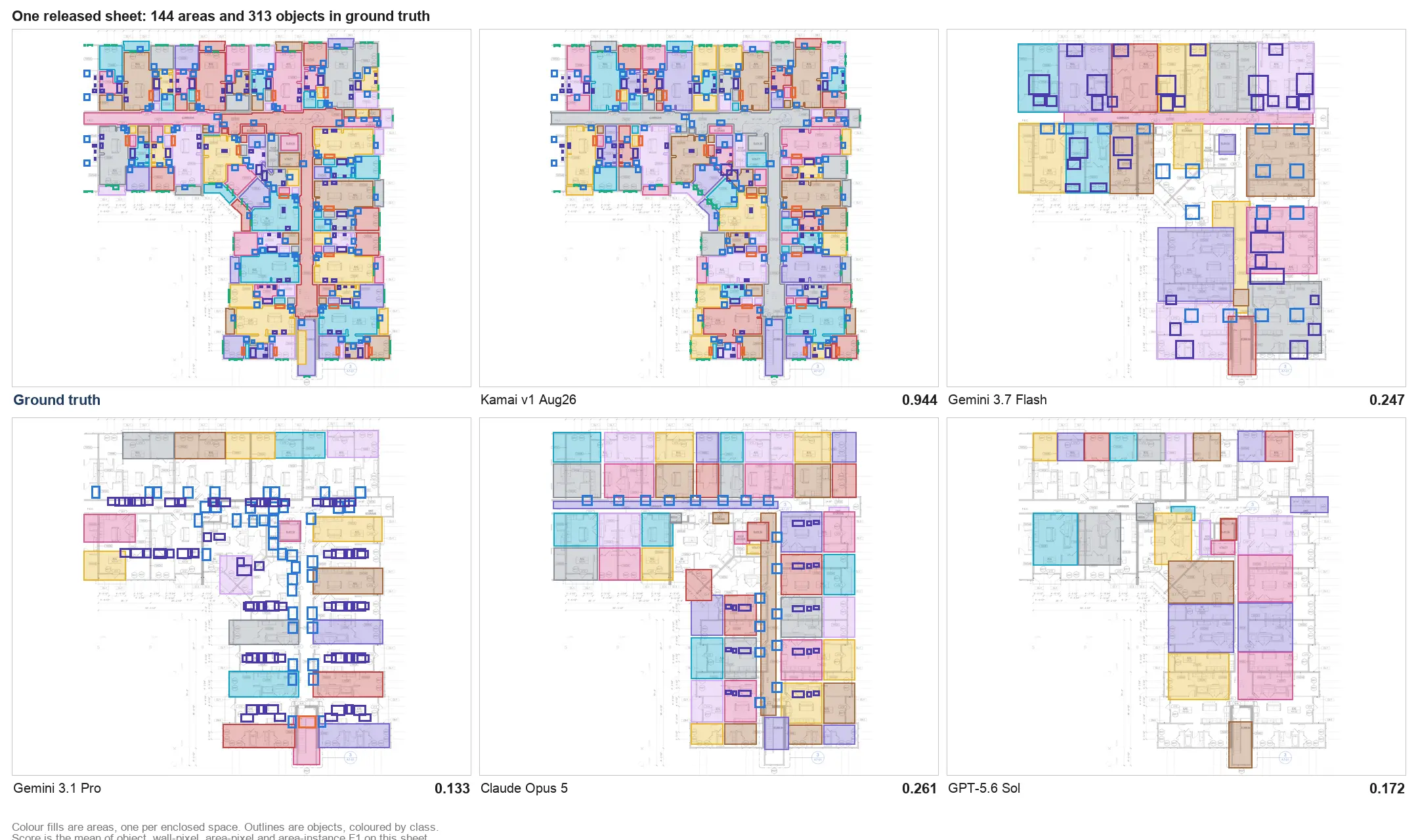
The shift that matters is the one where the software does the reading. You upload the set, Kamai's models read the drawings, and the quantities come back without anyone tracing a perimeter or clicking through every page.
A 40-sheet set goes from "something I still have to measure" to "quantities I can work with" in minutes. Because the models apply the same scale reading to every sheet, a wall is a wall whether it lands on page 4 or page 44, which kills the drift you get when one person measures the same plan at 9 a.m. and again at 6 p.m. And when a revision lands, you reanalyze the affected sheets and see the delta instead of restarting the count by hand. That last part is what keeps the number current through the addenda rounds every real project goes through.
Drawings become data you can use
The older workflow ended with a marked-up PDF. You still had to read your own markups back into a spreadsheet to do anything with them.
Kamai returns structured data instead. Quantities come out as values you can sort, filter, export to Excel, and drop into a PDF takeoff package, broken out by CSI division so the totals carry into the rest of your workflow rather than dying inside a markup tool. Because the data is structured, you can also line up the current job against past ones, watch cost trends, and catch a line item that is running hot before it shows up in the bid.
The app pairs that with an AI assistant you can query in plain language. Ask what changed between addenda, which sheet a count came from, or how a quantity breaks down by division, and you get an answer tied to the underlying data, not a hunt through forty sheets and a spreadsheet.
Fewer of the errors that came from doing it by hand
Material prices move, labor tightens, specs change mid-bid. A wrong estimate turns those variables into a loss the contractor eats. Automating the measurement removes a whole class of the mistakes that used to creep in - the miscounted assembly, the scale read slightly off, the page skipped under deadline - because the same reading gets applied across the set every time. Estimates that hold up are also how you keep the owners and GCs who hand you the next bid.
Where the hours go now
In a tight bid window, the takeoff used to consume the time. Now it does not, and that is the real change to the role. The hours that disappeared into tracing go back into the work that decides whether a bid wins or loses money:
- Pressure-testing scope coverage against the spec
- Pricing the line items that carry the risk
- Comparing assemblies and supplier numbers
- Answering the PM's "what if we switch this" while there is still time to act on the answer
A firm can carry more bids on the same staff without the quality of any single one slipping, because the constraint moved from how fast you can measure to how well you can think about the number.
The estimator's job, redrawn
None of this makes the estimator less necessary. It points them at the part of the work that actually needs a person. With the extraction handled, estimators spend their time interpreting results, flagging risk, and getting into projects earlier - sitting with owners during design to show what a choice costs before it is built, not after the set is final.
The expertise was never in the tracing. It was in knowing which numbers to trust, which scope is still loose, and where a job goes sideways. Software took the measuring; it left the judgment exactly where it was.
The drawings always held the quantities. The slow part was getting them out by hand. Hand that off, and an estimator's week stops being about producing the number and starts being about what the number means.
Get the next post in your inbox.
Low frequency. High signal.