The Hidden Costs of Manual Takeoffs
A manual takeoff looks free. The real bill shows up as lost hours, missed bids, rework on every revision, and margin that quietly leaks away. Here is what manual estimating actually costs.

A manual takeoff feels free. You already own the plans, the ruler, and the spreadsheet, so it looks like the cheapest way to price a job. It is not. The cost is real. It just never lands on an invoice.
Every bid starts with quantities pulled off the drawings. Get them wrong, or get them slow, and the damage runs well past the estimating desk. Most teams still do this by hand because it is familiar. Familiar is not the same as cheap.
Here is the bill you do not see on the invoice.
The hours are the smallest part
The obvious cost of a manual takeoff is the time spent measuring. Review the drawings, count symbols, measure lengths and areas, tally it into a spreadsheet, then check the math. On a medium commercial job that is hours, sometimes days.
But the hours are not the expensive part. The expensive part is what your best estimator is not doing while they trace lines on a sheet. Not reviewing scope, not sizing up risk, not chasing the next opportunity. You are paying senior judgment to do transcription.
That caps bid capacity. If a team can only turn around a handful of estimates a week, every hour spent measuring by hand is a proposal that never goes out.
Small measurement errors are not small in dollars
Margins are thin, and a manual process leaves room for a small mistake to become an expensive one. A missed run of ductwork. An overlooked fixture. A concrete area off by a factor. A device count that came up short. None of those stay contained to the estimate:
- Underestimate and you get emergency orders, delivery delays, extra labor, and a schedule that slips because the material was not there.
- Overestimate and you tie up cash in inventory nobody uses, eat the waste, and price yourself out of the job.
A quantity that is off by a little at takeoff turns into thousands of dollars once it hits procurement and the field. Cheap to make, expensive to own.
Manual work manufactures the errors
These mistakes are rarely carelessness. They are the predictable result of doing repetitive work by hand across a large set. A full drawing package runs hundreds of pages across disciplines, and the estimator moves between floor plans, schedules, specs, details, legends, and revisions while recording numbers one at a time. The bigger the set, the more likely something slips.
The usual failure modes:
- Working off a superseded sheet because a revision came in late
- Reading the wrong scale on a detail
- Double-counting a condition that repeats across sheets
- Missing a symbol in a dense legend
- A spec change that never made it into the estimate
Give a good estimator the same set on a tight Friday deadline and some of these will happen. That is not a knock on estimators. It is what manual, repetitive work produces.
Every revision makes you rebuild work you already finished
Construction documents do not sit still. Architects issue revised sheets, addenda land, specs get updated. With a manual takeoff, even a small change forces you back through multiple sheets to remeasure, update the spreadsheet, and reverify the math. Instead of touching only what changed, the team rebuilds finished work to be sure nothing downstream moved.
Do that three or four times over a bid cycle and the revisions cost more than the original takeoff did, with fresh chances to introduce an error on every pass.
Slow estimates are lost bids
Speed is a competitive advantage, and manual takeoffs give it away. Owners and general contractors evaluate proposals soon after they go out. The contractors who submit accurate bids quickly stay in the running. The ones still measuring do not.
Every estimate that goes out a day late is revenue a faster competitor already booked.
Manual measurement caps how many jobs you can chase at once. Cutting takeoff time lets you respond to more opportunities with the same staff, instead of hiring your way out of the bottleneck.
The leak spreads past the estimate
The damage is not limited to material pricing. Weak quantity data undermines procurement, scheduling, subcontractor coordination, labor planning, and cash flow. When your estimated numbers do not match what the job needs, you get change orders, budget increases, and uncomfortable conversations with the owner.
Do that repeatedly and it costs you something harder to rebuild than margin: the client's confidence that your number means something. Consistent quantities are what make an owner call you back.
What the fix actually removes
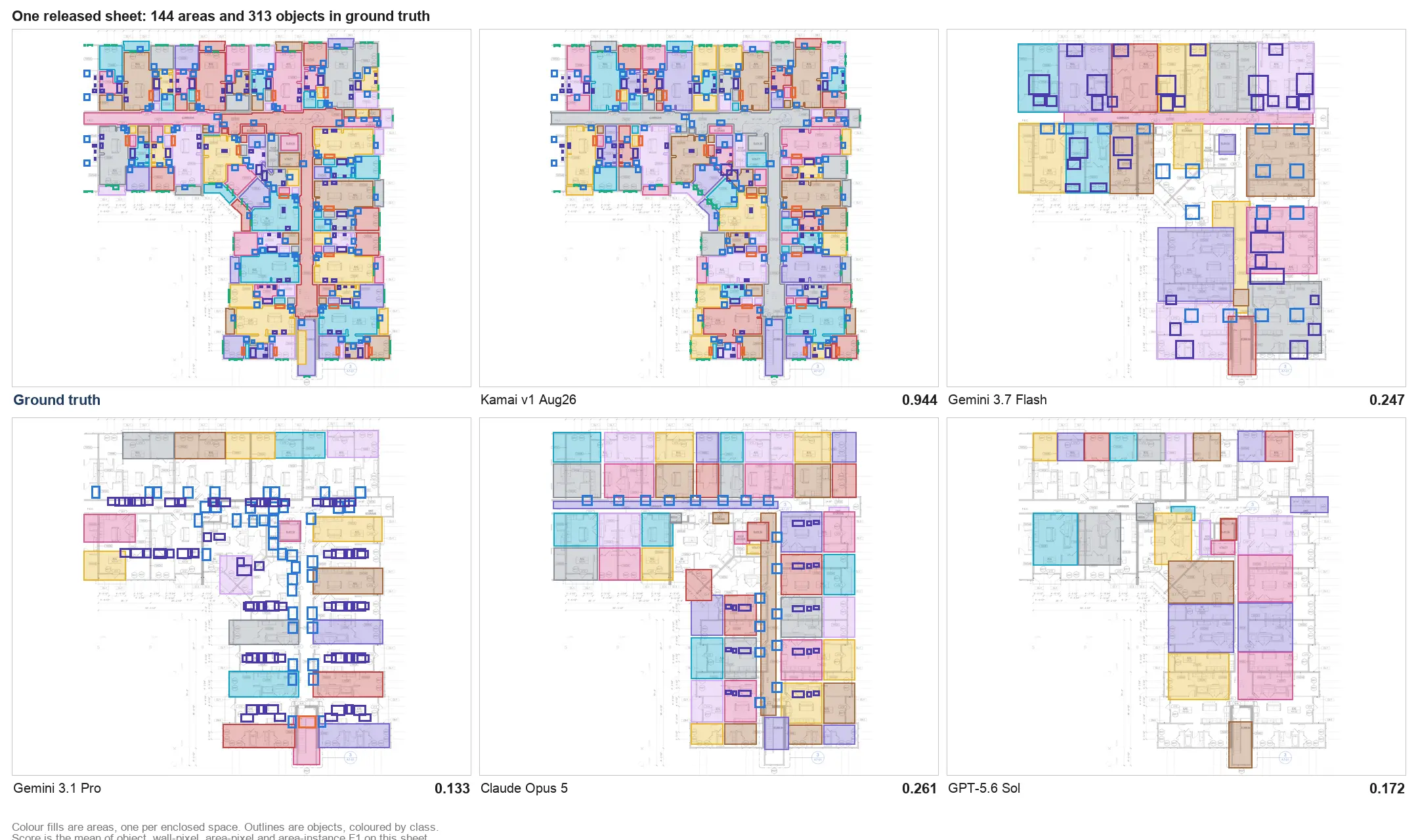
Kamai automates the most time-consuming part of estimating. Instead of tracing plans and counting symbols by hand, you upload the set and get structured quantity data back. Kamai reads the native vector geometry in the PDF or CAD file. It does not rasterize the sheet into an image and measure pixels. It computes from the drawing's own coordinates, identifies components across trades, recognizes symbols from the project's legends, and returns structured outputs your estimating already runs on.
Every quantity links back to the sheet and layer it came from, so you can verify a number without remeasuring it. When a revision lands, you reprocess the updated drawings instead of rebuilding by hand.
This does not replace the estimator. It removes the measuring and hands the time back, for reviewing quantities, refining scope, and pricing with judgment.
The bottom line
A manual takeoff looks inexpensive because the costs are hidden. They show up as lost productivity, errors that surface at buyout, revision rework, late estimates, wasted material, and bids you never got to submit. Added up, it is one of the most expensive line items in preconstruction, and none of it prints on the invoice.
Accurate takeoffs are how you protect margin, make better calls, and stay competitive. Kamai extracts the quantities, cuts the errors, and lets you turn bids around faster. See it on your own drawings in the app, or wire it into your workflow through the API.
Frequently Asked Questions
Why are accurate construction takeoffs important?
Reliable quantities are the foundation for estimating, procurement, scheduling, and budgeting. Get them right and you reduce the costly errors that surface later at buyout and in the field.
What are the biggest risks of manual takeoffs?
Quantity errors, missed revisions, incorrect measurements, project delays, material waste, and the thinner margins that come with all of them.
How does Kamai reduce the cost of takeoffs?
Kamai reads the drawings directly, detects components across trades, measures quantities, recognizes symbols from the project legends, and returns structured outputs, so estimating is faster and more consistent without the manual measuring.
Can automation reduce estimating time?
Yes. It takes the repetitive measurement off the estimator, so bids go out faster with consistent accuracy across the set.
Is AI replacing estimators?
No. It automates the repetitive quantity extraction so estimators can spend their time reviewing results, refining bids, managing risk, and pricing with judgment.
Get the next post in your inbox.
Low frequency. High signal.