How much effort does embedded takeoff API require?
What it actually takes to integrate Kamai's takeoff API: auth, upload, and structured quantities back from blueprints in days, not months.

If you're a software team deciding whether to build takeoff into your product or pull it in through an API, the real question isn't whether it's possible. It's how many engineering weeks you'll burn before users can upload a set and get quantities back. With the Kamai API, that's usually a few days of plumbing, not a quarter-long project.
What "embedded takeoff" actually means here
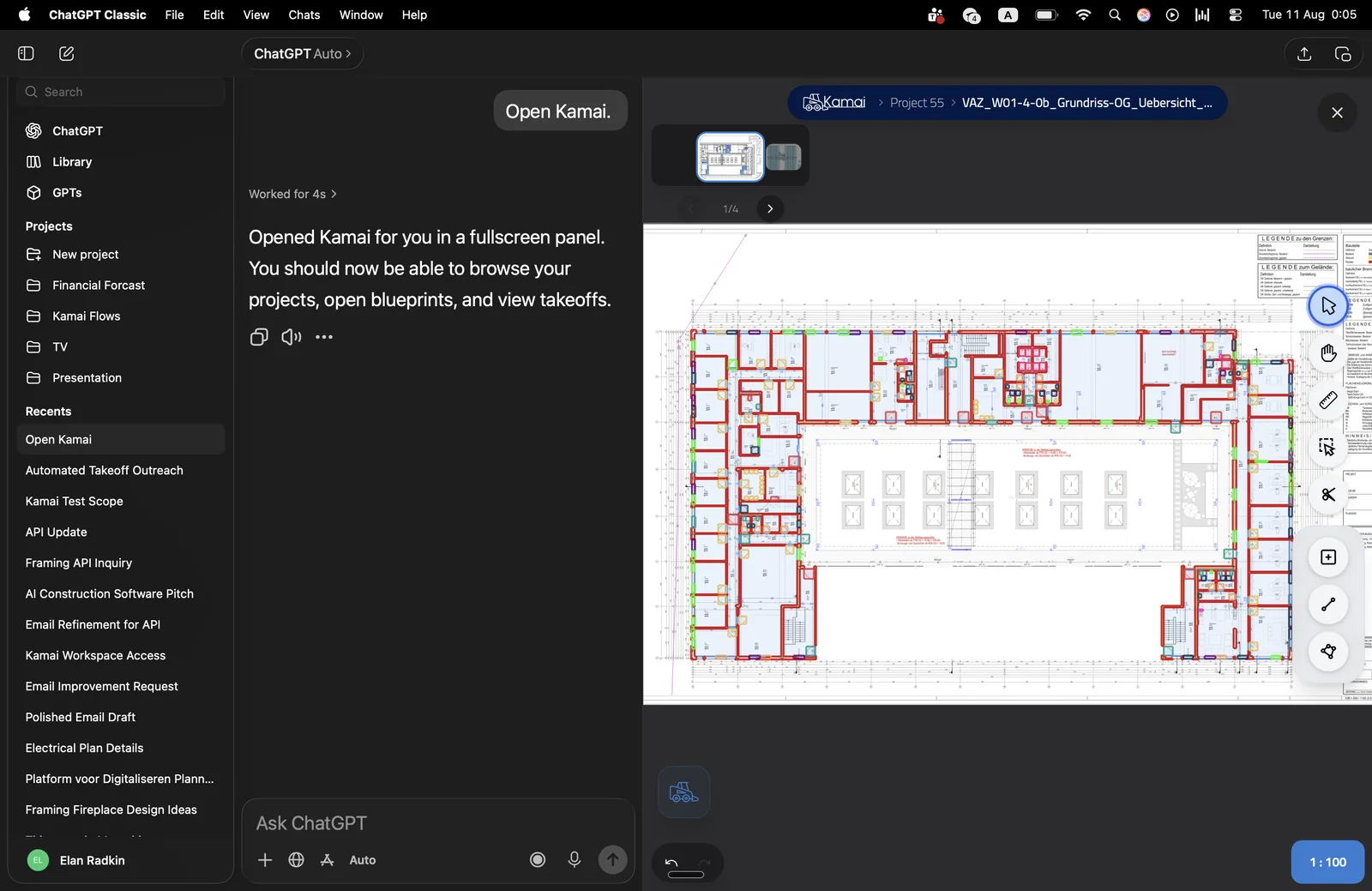
An embedded takeoff API lets your platform - estimating software, a project management tool, or something you built in-house - send a drawing set to Kamai and get back structured quantities. Your users stay inside your product. They upload a PDF, the takeoff happens, and the numbers land back in your interface. No second login, no exporting to a separate measuring tool and re-importing the results.
How much work it takes on your end depends on three things: what your stack already looks like, how much of the result you want to surface natively versus pass through, and whether takeoff is a side feature or core to the workflow. None of those require you to know anything about computer vision.
The part you don't have to build
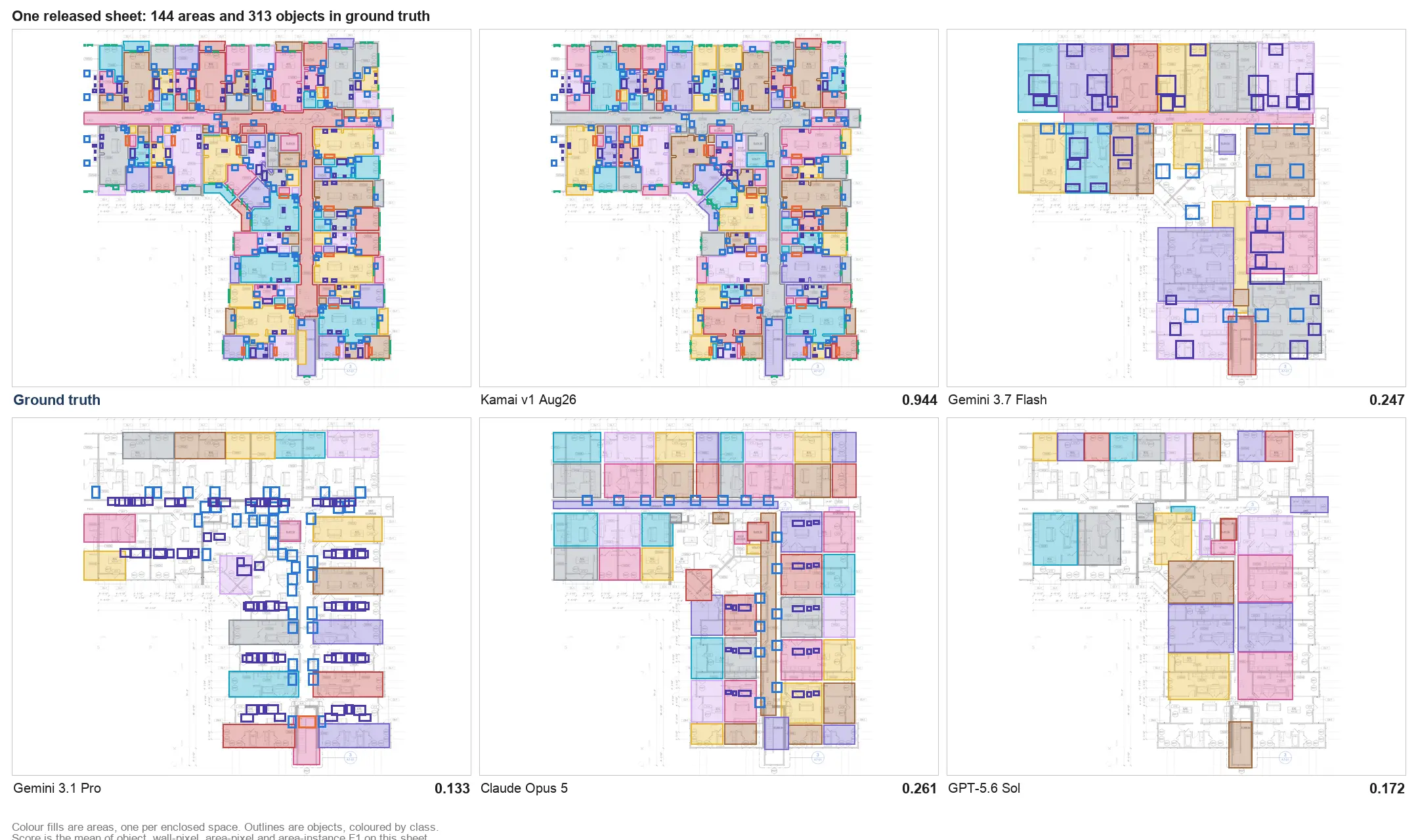
The hard problem in takeoff isn't the UI. It's reading a drawing the way an estimator does: handling inconsistent scales across sheets, telling an architectural plan apart from a structural one, finding the openings, and not double-counting a wall that's shared between two units. Teams that try to build this internally end up maintaining models they never wanted to be in the business of training.
That's the work Kamai's models do. You send the set, the models extract walls, floors, openings, and materials, and compute dimensions, areas, and volumes. Your integration is mostly moving inputs in and structured data out, which is why the timeline is days or weeks instead of months.
A typical integration, step by step
There are really only three moving parts.
- Connect. Authenticate against the API and wire up the endpoints. This is the same kind of work as integrating any other service you already use.
- Send the set. Let users upload their drawings, usually as PDFs, and pass the file to Kamai for processing. The models do the detection and measurement.
- Use the result. Quantities come back as structured JSON. Display them in your UI, store them, or feed them straight into your estimating logic, reports, or cost workflows.
Because the output is structured rather than a flat image or a static report, you're not parsing anything fragile. The quantities are ready to map onto your own data model on arrival.
What your users stop doing
Manual measurement is the part estimators dread, and it's where mistakes hide: a misread scale, a forgotten addendum, a count that's off because someone lost their place across forty sheets. Embedding the API removes that step. Dimensions and quantities come straight off the drawings, so there's no scaling by hand and no ruler work.
Speed is the second payoff. Users upload a set and get quantities back quickly enough that they can run more bids in the same week, which is usually the reason a team wanted automated takeoff in the first place. And since the numbers arrive as structured data, the people using your product spend their time comparing options and pricing work instead of gathering measurements.
What it means for your engineering team
The concern most software teams raise is maintenance, not the initial build. Nobody wants to own a trained model, a drawing-recognition pipeline, and the accuracy regressions that come with both.
You don't. Kamai owns the extraction. Your team integrates against a documented API and keeps shipping on your actual product. When volume grows, the API handles more drawings and more concurrent projects without you provisioning anything new, so scaling your user base doesn't turn into a takeoff-infrastructure project on the side.
Common questions before you commit
Will it disrupt the existing workflow? It's additive. You're sending files out and reading quantities back, so you can layer takeoff onto your current product without reworking it.
How accurate is it? Kamai's models do the extraction, which cuts down the manual re-checking that eats the time savings. You still review, but you're verifying numbers rather than producing them from scratch.
Will users adopt it? They don't have to learn a new tool. The takeoff lives inside the product they already use, so it shows up as a faster version of a workflow they know.
The longer view
The integration cost is front-loaded and small. What you get back is takeoff your users don't have to leave your product to run, structured quantities you can route into estimating and reporting, and a feature you didn't have to staff a research team to maintain.
So how much effort does an embedded takeoff API require? Less than building it yourself, and far less than maintaining it once it's built. You connect, you pass the set, and the quantities come back ready to use.
Get the next post in your inbox.
Low frequency. High signal.