How Kamai Helps You Analyze Blueprints Instantly and Decide With Confidence
Kamai reads blueprints with AI, returns structured quantities in minutes, and gives estimators verifiable data to bid and decide with confidence.

A bid set lands in your inbox at 4 p.m. with a walk the following week. Inside are a hundred-plus sheets across architectural, structural, and MEP, two rounds of addenda that already moved a wall and reworked the roof framing, and a scale bar you need to confirm before you trust a single dimension. The blueprint holds every number you need to price the job. Getting those numbers out is where the days go.
For most estimators the constraint is not judgment, it is extraction. You know which assemblies matter and where the risk sits. You just can't get there until someone has traced areas, counted fixtures, and reconciled the addenda against the base sheets. Kamai exists to close that gap: it reads the drawings, returns structured quantities, and leaves you the part of the work that actually requires an estimator.
Where Manual Takeoff Goes Wrong
The slow part of takeoff is rarely the math. It is the navigation. You page through a PDF, verify the scale on each sheet because a "1/8 inch = 1 foot" note doesn't survive a rescaled plot, trace every area, and count objects one symbol at a time. On a large set that is hours of work that has to happen before any analysis can start.
The errors that hurt most are quiet ones. A drawing plotted at the wrong scale throws every measurement off by a fixed ratio. A shared demising wall gets counted twice when two people split the same building. An addendum revises a detail and the takeoff never catches up. None of these announce themselves. They surface in the number, after the bid is out.
Reading Drawings With Kamai's Models
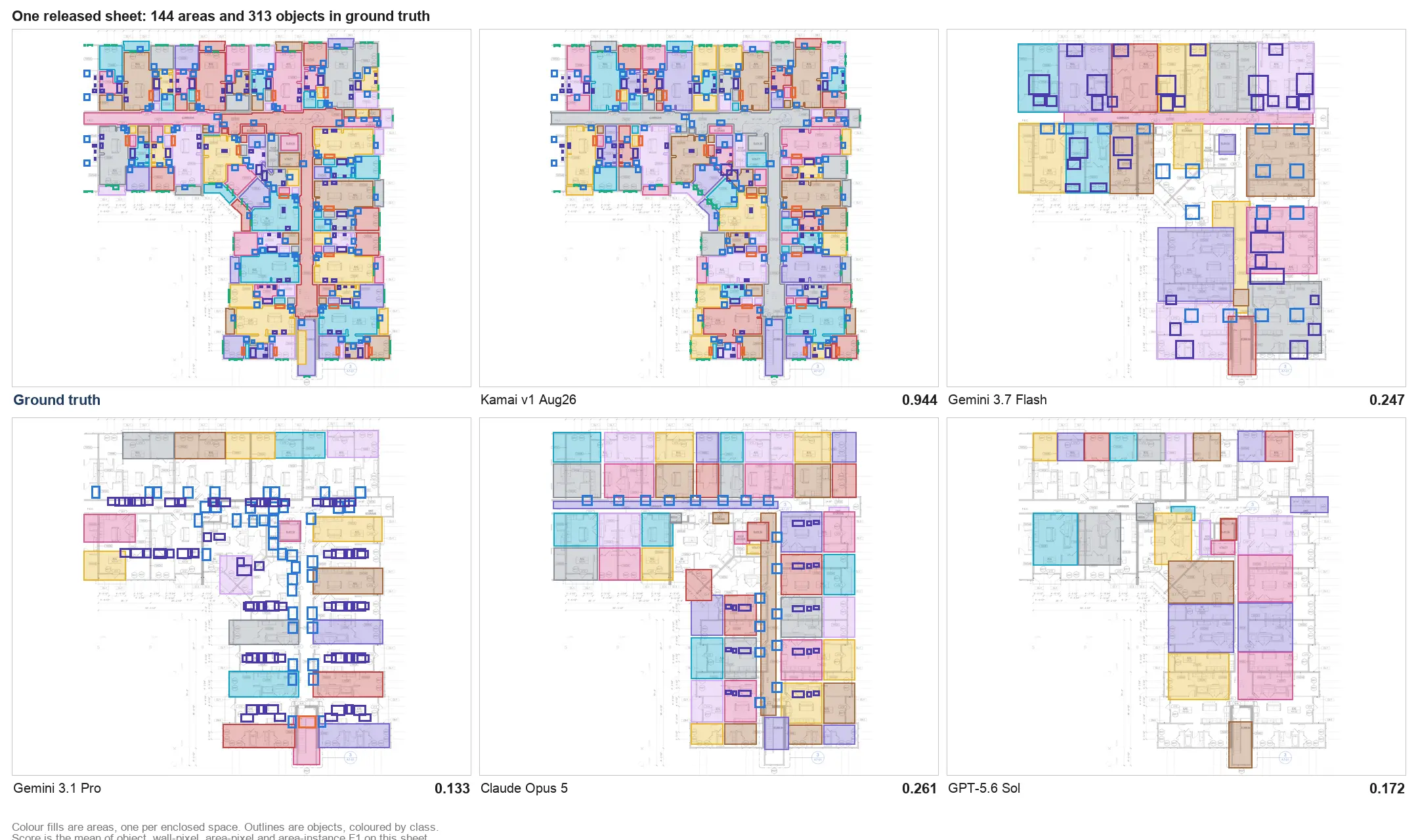
Kamai runs the takeoff with in-house foundational models trained to read construction drawings. Upload a set and Kamai identifies the sheets, applies the right scale, measures areas and lengths, and counts symbols, then returns the result as structured data rather than a marked-up image you still have to transcribe.
The output is the part that matters. Quantities come back as structured JSON keyed to the trades and divisions on the drawing, so they move straight into the next step instead of living in a screenshot. Export to Excel when an estimator wants to work the numbers in a familiar sheet, or to PDF when you need a record to hand off or attach to a bid. A set that took an afternoon to measure by hand comes back in minutes, and every quantity traces back to where it was pulled.
Consistency Across the Set
Hand takeoff drifts. Two estimators trace the same parking lot and land on different square footage; the same person counts receptacles differently at hour six than at hour one. Kamai applies the same logic to every sheet regardless of size or complexity, so the variance between drawings comes from the design, not from who measured it.
That consistency is what makes the data worth trusting. When you stop re-checking how a number was produced, you can spend the time on what it means: which assemblies drive the cost, where the design carries risk, and which alternates are worth pricing.
Asking the Drawings Questions
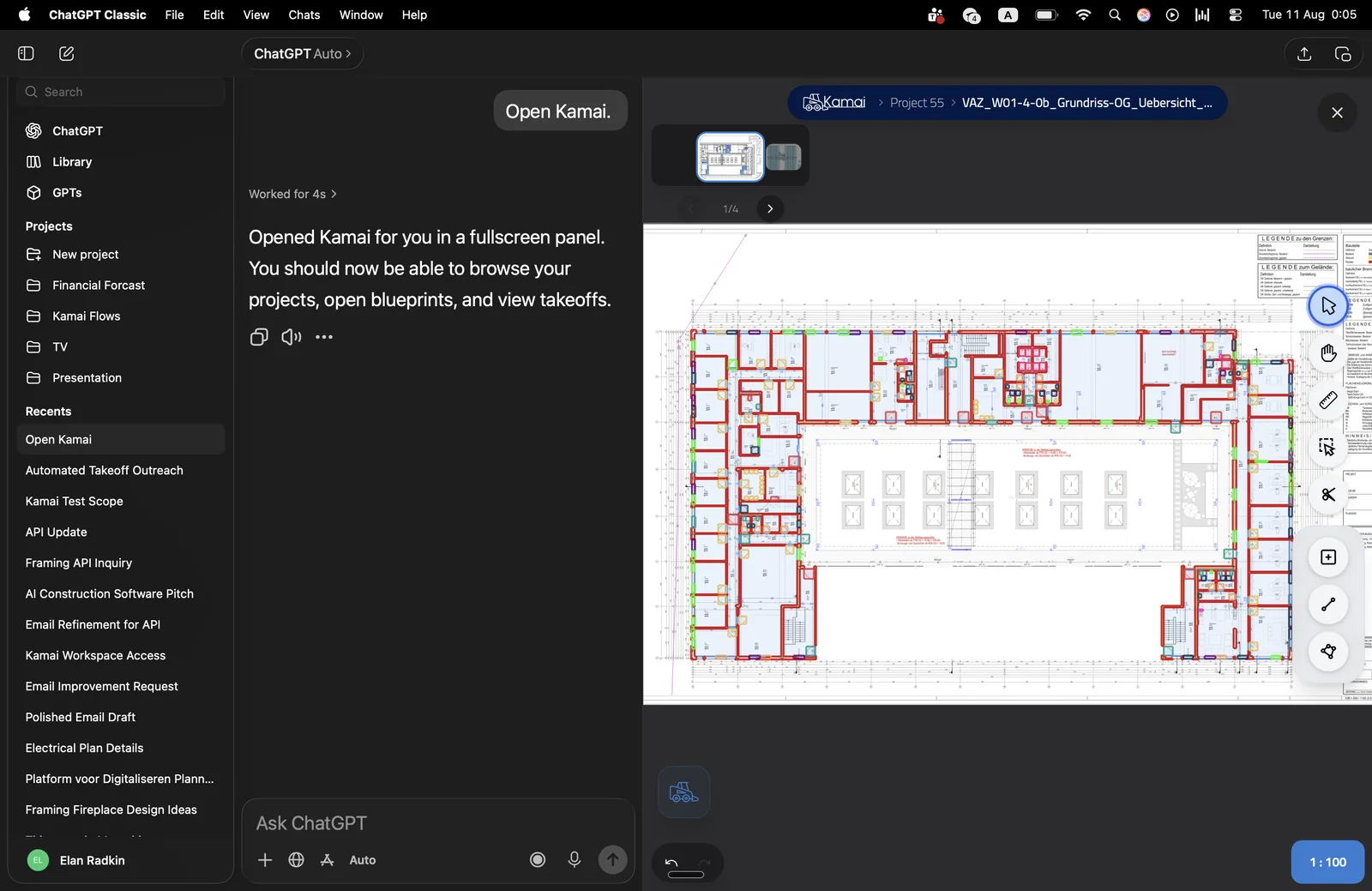
Kamai's app includes an AI assistant that lets you query your takeoff in plain language instead of hunting through sheets and spreadsheets. Ask what changed between addenda, which sheet a count came from, or how a quantity breaks down by division, and you get an answer tied to the underlying data.
It works like having an estimator on call who already knows the set. You confirm a detail, reconcile a discrepancy, or sanity-check a number without reopening the PDF and tracing it again.
When the Design Changes
Revisions are constant, and on a manual takeoff each one means re-measuring whatever the change touched. With Kamai you re-run the updated set and get fresh quantities without starting over. Reprice the affected scope, see what the revision did to your numbers, and keep moving. The cost of a design change drops to the cost of re-reading it.
Decisions You Can Stand Behind
The reason any of this matters is the moment you present the number. When a GC or owner pushes on an estimate, you want to show where each quantity came from, not promise to go back and check. Because Kamai's output is structured and traceable to the drawing, you can answer the question on the spot: which sheet, which division, what the addendum changed.
That is the practical version of deciding with confidence. Not faster for its own sake, but bids built on numbers you can defend, produced early enough to actually weigh the alternatives before the clock runs out.
Get the next post in your inbox.
Low frequency. High signal.