How Construction Estimating Has Advanced Over the Years
From scale rulers and tally marks to AI takeoff: how construction estimating got faster and more accurate, and where Kamai fits.

A century ago, pricing a building meant a person with a scale ruler, a stack of paper sheets, and weeks of arithmetic. Today an estimator can pull quantities off a PDF set in an afternoon. The job in between - reading drawings and turning them into numbers a contractor can bid - has not changed. The tools have, four or five times over, and each shift handed the estimator more leverage and less busywork.
This is how we got from hand counts to AI takeoff, and what that means for how estimates get built now.
When everything was done by hand
For most of the 20th century, estimating was a manual craft. You worked from physical prints - architectural, structural, mechanical, electrical, plumbing - rolled out on a wide table. A scale ruler told you what a wall measured at quarter-inch scale. You read distances and areas straight off the sheet and wrote them down.
Every quantity came from your own hand. Linear feet of footing, square feet of slab, runs of pipe, structural members: measured one at a time and run through formulas in a notebook. Fixtures - doors, windows, light fixtures, plumbing rough-ins - got counted with tally marks or colored pencil so you would not double-count a symbol or skip one in a dense corner of the plan. Those counts went into handwritten columns, then into cost breakdowns priced against labour rates, material costs, and supplier quotes.
A skilled estimator produced excellent numbers this way. The problem was throughput and exposure. One person could only hold so much of a set in their head at once, so a large development took a long time. And the work was fragile: a scale read at the wrong setting, a symbol missed on a crowded MEP sheet, or one arithmetic slip could throw a number off enough to blow the budget or lose the bid. Big industrial and infrastructure jobs needed whole teams of estimators working for weeks to get a defensible price together.
The spreadsheet decade
Personal computers reached estimating desks in the 1980s, and the spreadsheet was the first real change to the workflow. After Excel shipped in 1985, the column-and-formula table that estimators had been keeping on paper became something the computer would total for them.
That solved one specific failure mode: the arithmetic. A formula does not transpose a digit or forget to carry, so totals recalculated cleanly when a quantity changed. Cost data also got organized - quantities, labour rates, supplier quotes, and project totals living in one structured workbook you could edit and re-run. And because old workbooks did not disappear, estimators built up history they could pull from when a similar job came across the desk.
Spreadsheets stuck. A large share of construction professionals still estimate in Excel today, and for good reason - it is flexible and everyone already knows it. But the spreadsheet never touched the part of the job that ate the most hours. You still measured the drawings by hand and typed every quantity in. The computer did the math; the human still did the takeoff.
Estimating software moves the takeoff on-screen
The early 2000s brought software built for construction rather than borrowed from accounting. The headline feature was on-screen takeoff: load a digital plan file, set the scale, and measure areas, lengths, and volumes by clicking on the drawing itself. The scale ruler went in a drawer.
These platforms also kept cost databases you could reuse from job to job and organized estimates into structured breakdowns, which made a set of numbers easier to review and harder to lose track of. The limits were practical. Most of it ran as desktop software with the project file sitting on one machine, so two people in two offices could not easily work the same estimate. And the license cost put it out of reach for plenty of smaller shops. Even so, by the end of the decade on-screen takeoff was the default, and paper plan rooms were on their way out.
The cloud opens up collaboration
In the 2010s, estimating moved off the local drive. Cloud platforms put the project data somewhere everyone could reach it, which changed how teams worked together more than it changed the takeoff itself.
A few things became normal that had been painful before. Several people could be in the same estimate at once, so an estimator, a project manager, and a contractor were not emailing versions back and forth. A revised drawing or an updated unit price showed up for everyone, which matters on a job where a late addendum can quietly invalidate a number someone already priced. And the file followed you between the office and the trailer on site.
Cloud systems also connected estimating to the software around it - project management, scheduling, procurement - so a takeoff was no longer a dead end. The numbers could feed the rest of the project. The estimating software market has kept growing as firms move onto these connected tools.
AI and the automated takeoff
The current shift is automation of the takeoff itself - the part every prior generation of software left to the estimator. Instead of clicking out every wall and counting every fixture, AI reads the drawing and pulls the quantities.
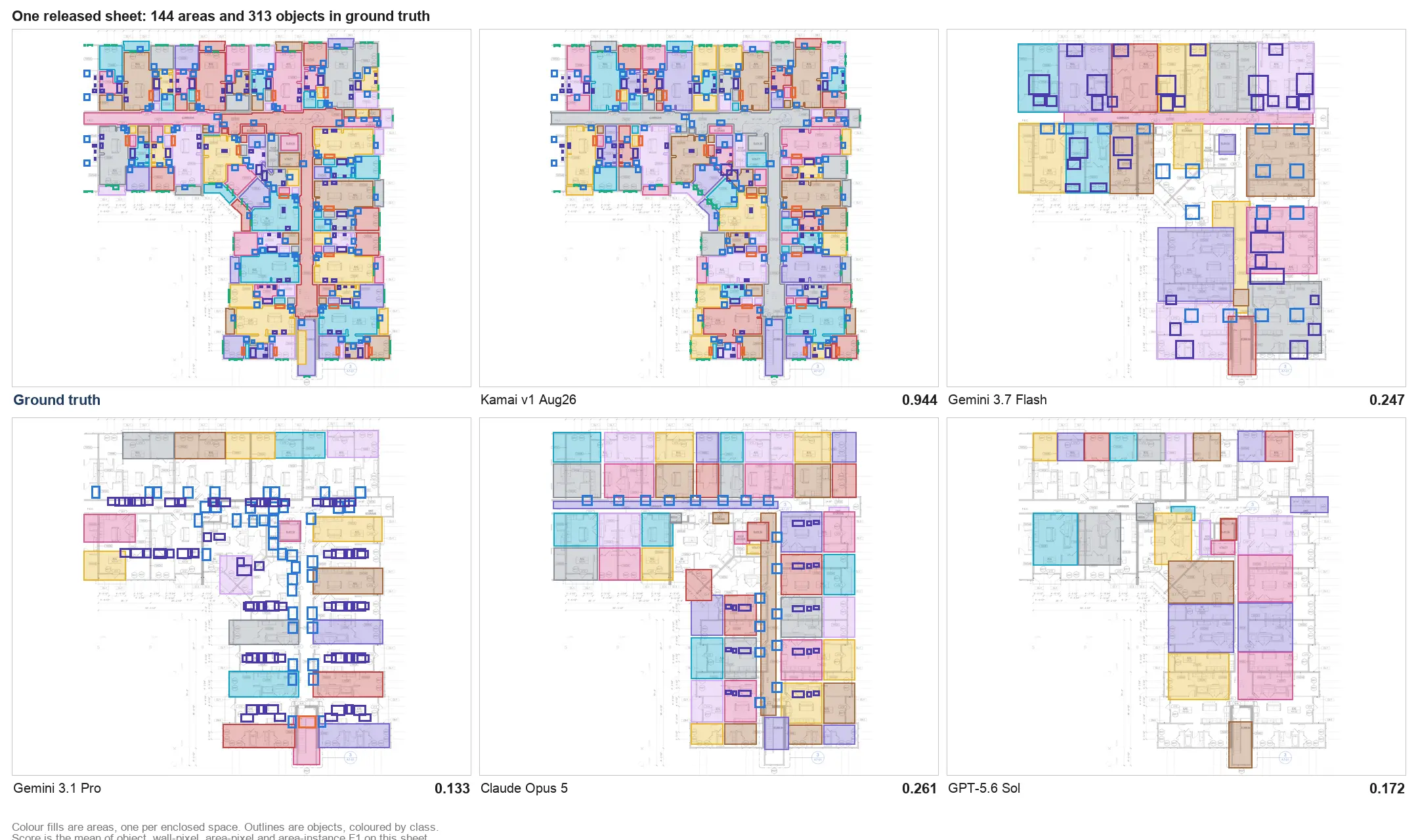
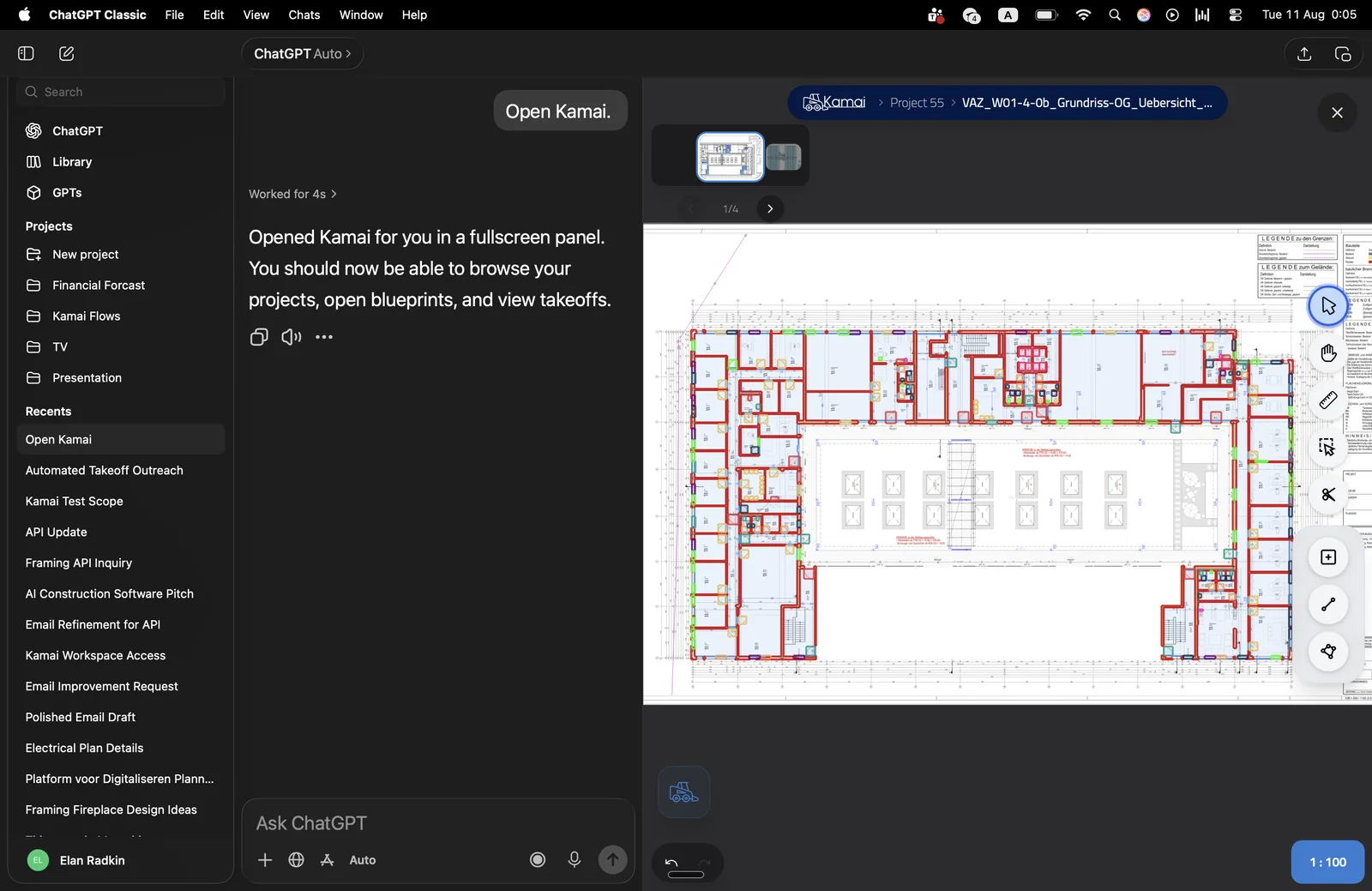
Kamai is built around this. You give it a plan set and Kamai's models read the linework, recognize building components - walls, floors, structural elements, mechanical systems - and return structured quantity data instead of a person tracing each one. That removes the slowest, most repetitive stretch of the job, the hours that used to go into measuring and tallying by hand.
A few capabilities sit on top of the takeoff:
- Reading the drawings. Kamai's models interpret a construction set and extract quantities, so the estimator is reviewing and adjusting output rather than starting from a blank page.
- Cost forecasting from history. Trained on past project data, the models surface trends in labour and material pricing and timelines, which gives an estimator a more grounded forecast than a flat unit cost.
- Catching outliers in bids. Comparing subcontractor numbers against historical data flags a price that does not fit, so a bad line gets a second look before the bid goes out.
- Testing scenarios. Running different procurement or scheduling options against the same quantities to see which approach prices out best is the direction these tools are heading.
The structured data Kamai produces is meant to be used, not admired. Quantities export to Excel and PDF, come back as structured JSON for systems that want to consume it directly, and the in-app AI assistant lets an estimator interrogate a takeoff - check a count, pull a subset, question a number - without leaving the work.
What the estimator's job becomes
When the measuring and counting come off your plate, the job does not shrink - it moves up a level. Estimators used to spend the bulk of their time on calculations and drawing review. With that automated, the time goes to the parts that actually decide whether a bid wins: reading project risk, comparing construction methods, negotiating with suppliers, and shaping a competitive number.
That is a better use of an experienced estimator. The value was never in tracing walls; it was in judgment about what a job will really cost and where it can go wrong. Modern estimators are advisors in the planning process, and their read on a set keeps the budget tied to how the thing will actually get built.
Where this is going
The next stretch is tighter coupling between AI, the cloud, and construction data - automated takeoff feeding cost forecasting feeding project analytics, so a team gets a usable picture of cost and risk earlier than the design is usually firm enough to price. Firms that adopt these tools get to bid more work without adding estimators in proportion, which is the practical reason the shift is happening at all.
The arc is consistent: paper to spreadsheet to on-screen takeoff to the cloud to AI, each step pulling manual labour out of the takeoff and handing the estimator more time for the decisions that need a person. Kamai is the current step - turning a plan set into reliable, structured quantities, fast - so estimators spend their hours on the call that wins or loses the job, not on the tally marks.
Get the next post in your inbox.
Low frequency. High signal.