5 Real Reasons Construction Takeoff Services Are Changing the Building Sector
How AI takeoff services pull quantities straight from drawings, tighten bids, and protect margins for contractors and estimators.

Most estimators still do takeoff the same way they did twenty years ago: open the set, set a scale, and start clicking around the plan with a digitizer or a highlighter. It works, but it is slow, it is hard to staff, and a single missed addendum or a wrong scale on one sheet can quietly poison an entire bid.
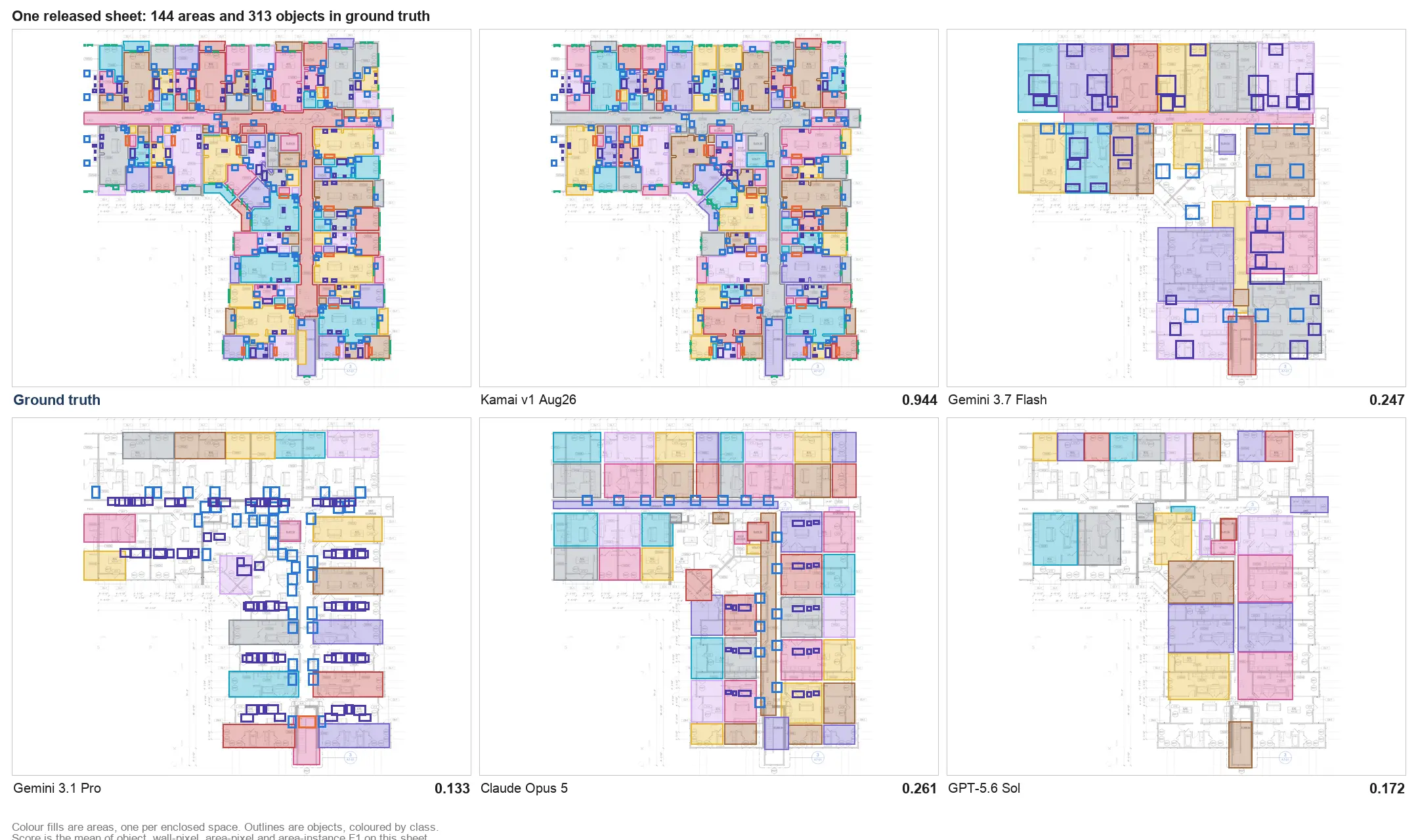
That is the gap AI takeoff services are closing. Instead of a human tracing every wall and counting every fixture, software like Kamai reads the drawing set and returns measured quantities you can check and edit. Here are five reasons that shift is changing how buildings get priced and built.
1. Material planning starts from the drawings, not from gut feel
Order short and you halt the crew waiting on steel. Order long and you eat the overage. Both come from the same root problem: quantities pulled by eye, padded by experience, and rarely tied back to the actual sheets.
Kamai's models read the set and return areas, lengths, volumes, and counts directly from the linework - slab area off the foundation plan, drywall runs off the partition plan, fixture counts off the MEP sheets. You still review the numbers, but you are reviewing a measured takeoff against the drawing, not reconstructing it from memory. That is the difference between a buyout list you can defend and one you hope is close.
2. Bidding gets faster without getting sloppier
In a crowded bid list, the contractor who can turn around an accurate number first gets more shots at work. Manual takeoff caps how many of those you can chase, so estimators triage: bid the jobs they have time for, no-bid the rest.
Kamai compresses the measuring step from days to minutes, which changes the math on which jobs are worth pursuing. Just as important, the quantities come with the data behind them, so when you price the work you are not burying risk under a fat contingency to cover what you might have miscounted. Tighter quantities mean you can shave the padding and still protect the margin.
3. The numbers hold up once the job is underway
Budget overruns rarely start on site. They start in the takeoff, where a partition counted twice or a shared wall measured on both sides looks harmless until the drywall invoice lands.
Because the quantities trace back to specific sheets, you catch those problems during preconstruction instead of during construction. Early, structured numbers let the team forecast cost against real measured work, flag the line items most exposed to change, and skip the emergency reorders and rework that quietly erode the fee.
4. From design set to bid in an afternoon
When a takeoff takes a week, every downstream date moves with it - the bid, the buyout, the schedule. Speed on the front end buys slack everywhere after it.
Kamai turns a drawing set into structured data fast enough that a revised set landing the day before bid day is no longer a crisis. Reprice the affected scope, export the updated quantities to Excel or PDF, and move on. The takeoff stops being the bottleneck that dictates how much of the set you can responsibly cover.
5. It scales when your volume does
A two-person estimating shop and a regional GC hit the same wall at different sizes: more drawings, more concurrent bids, more people who all need to count things the same way. Hire your way out and consistency drifts; everyone has their own habits.
Kamai gives a growing team one consistent way to measure across every project, and the output is structured so it moves into the rest of the stack. Quantities export to Excel and PDF, feed estimating software, and connect to BIM workflows rather than dead-ending in a marked-up PDF. The AI assistant in the app lets estimators query a takeoff directly - what changed between revisions, where a quantity came from - without re-opening every sheet by hand. For developers and platforms, the API and MCP make those same quantities available programmatically.
Where Kamai fits
Kamai is not a measuring shortcut bolted onto a viewer. Its models are built in-house and trained on construction drawings, so the output is structured quantity data you can route into estimating, planning, and buyout - not a screenshot of a takeoff you still have to retype.
Takeoff has always been the unglamorous step that decides whether the rest of the bid is built on solid ground. Getting it measured, traceable, and fast is what lets a contractor bid more work and price it with less guesswork. That is the part of the job worth handing to software that reads the drawings as carefully as a good estimator would.
Get the next post in your inbox.
Low frequency. High signal.