Vertical AI for Estimating and Takeoff
General AI reads a blueprint like a photo. Vertical AI reads it like a drawing. Why construction estimating needs models built for its own geometry.

Construction is adopting AI, but not all AI is built for the same job. A general model can summarize a document, answer a question, or label objects in a photo. Construction estimating needs something narrower and more exact. Every measurement, quantity, and material count has to be right, because a small error in the takeoff turns into a real error in the bid.
That is the case for vertical AI: models trained for one industry instead of all of them. Kamai takes that approach for construction, building models that understand drawings, floor plans, and technical documentation at the level of geometry rather than treating them as images.
Why a general model is the wrong tool here
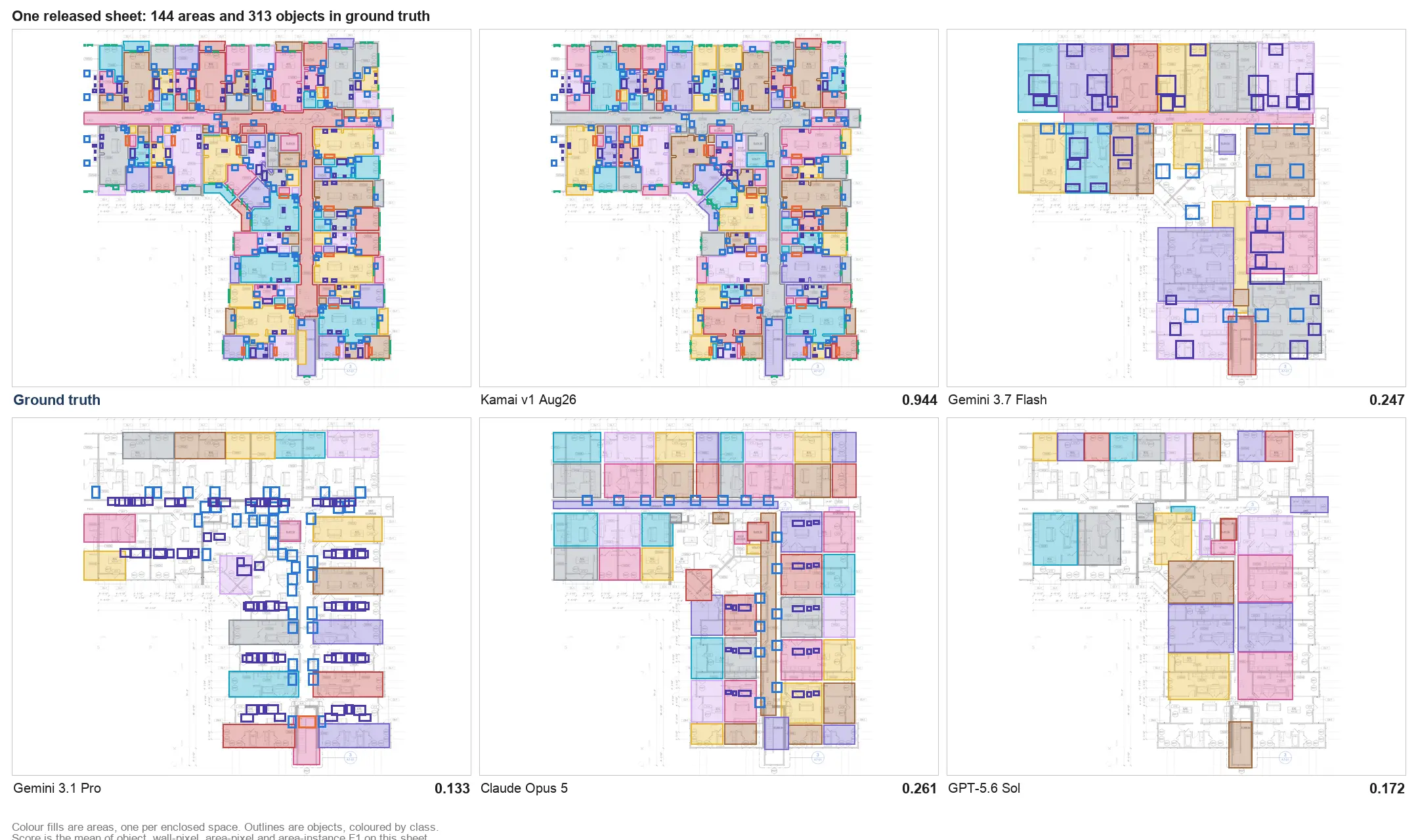
General models process a blueprint the way they process any picture. They find visual patterns and predict from pixels. For basic image recognition that is fine. For a takeoff, where the number decides whether the job earns or loses money, prediction from pixels is not a foundation you want to price against.
Estimating needs exact values for areas, lengths, volumes, material quantities, room dimensions, and object counts. Kamai works from vector-based drawings, reading scale, annotations, symbols, and the spatial relationships between elements, and computes measurements from the source geometry instead of approximating them from an image. The result is quantities you can actually trust before pricing starts.
The squeeze estimators are under
Estimating has become one of the tightest bottlenecks in the business. As competition rises, contractors have to submit more bids to hold the same workload. A firm that used to win one bid in four might now win one in ten. That means more projects to estimate, tighter deadlines, more pressure on the team, higher labor cost, and more room for expensive mistakes.
Traditional workflows struggle to keep up because every project still needs hours of manual measurement, verification, and data entry. More volume against the same manual process just means more hours or more errors, usually both.
Why hiring your way out is hard
Experienced estimators are skilled, expensive, and increasingly hard to find. Growing the department raises overhead without guaranteeing more wins. And when the workload climbs, the work degrades in predictable ways: rushed takeoffs, transcription errors, less time for bid strategy, weaker quality control. Over time that lands on the bottom line.
How Kamai changes the workflow
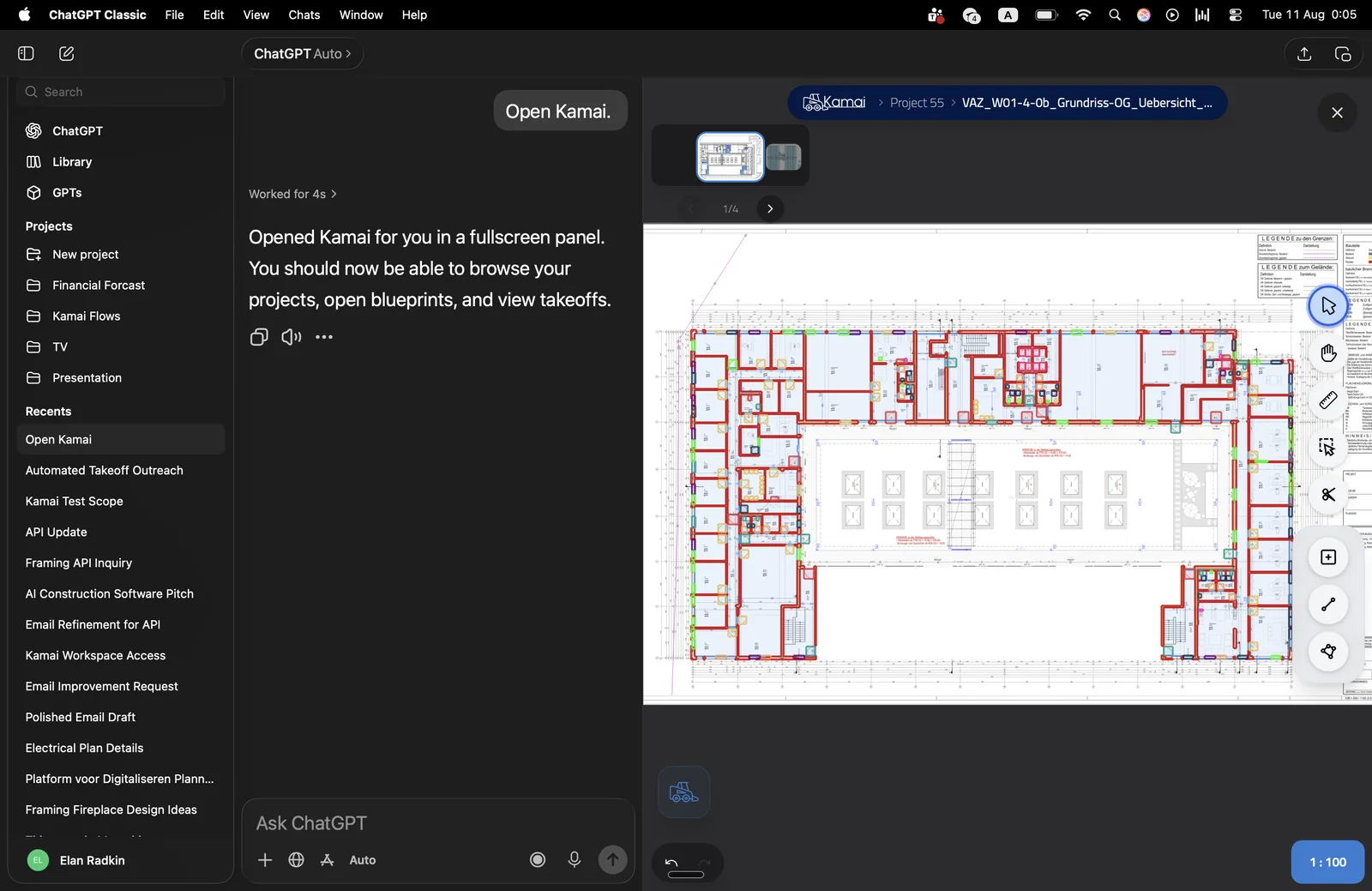
Kamai replaces the repetitive part of the work with models built for construction documents. Instead of tracing every wall, room, fixture, and floor area by hand, you upload the drawings and Kamai extracts the quantities: areas, lengths, volumes, material quantities, fixture counts, and structural dimensions.
Because it works from native PDF geometry rather than a rasterized image, the measurements stay tied to the drawing's original coordinates. The estimator spends less time measuring and more time reviewing costs and making bidding decisions.
Purpose-built means accountable numbers
The core difference between vertical and general AI is how the measurement gets made. A general model interprets an image. Kamai reads engineering geometry, so it can work with construction symbols, drawing layers, room boundaries, dimensions, scale, and cross-sheet relationships, and compute measurements directly from the drawing rather than approximating them. That cuts the risk of a quantity error before pricing even begins, and it comes with provenance: every number traces back to the sheet and layer it came from.
Faster, without giving up quality
Deadlines rarely leave room for a slow takeoff. Kamai automates the repetitive measurement so the team can move quickly through a set, then spend its time on reviewing extracted quantities, validating scope, and preparing a competitive bid. The workflow ends up both faster and more dependable, which is the combination that actually matters under a deadline.
Structured data instead of manual entry
A lot of estimating mistakes happen after the measuring is done, when numbers get copied into spreadsheets or moved between platforms. Every transfer is another chance for a mistake. Kamai produces structured, typed quantity data that exports straight into estimating platforms, spreadsheets, or an API, with traceability back to the original drawing the whole way through. That gives you a clean audit trail instead of a pile of re-keyed cells.
One data foundation, many workflows
Kamai is more than a takeoff app. The same structured data supports quantity takeoffs, estimating, scope-of-work generation, specification review, RFI extraction, and submittal review. Because they all sit on the same underlying geometry, teams stop repeating the same work across separate tools.
Why this is where estimating is heading
AI will keep changing construction, but the industry-specific models are where the value lands. Construction drawings carry geometry, engineering standards, symbols, and technical relationships that general AI was never built to read. Vertical AI exists to solve exactly those problems, and for contractors that means more accurate takeoffs, faster bid prep, lower estimating cost, and better decisions before anyone breaks ground. As the volume of bids keeps climbing, purpose-built models are a way to get more productive without simply hiring more estimators.
The takeaway
Estimating depends on reliable quantities. If the measurements are off, every material calculation, labor allowance, and budget built on top of them is off too. Kamai uses AI built specifically for construction drawings, reading geometry, scale, symbols, and engineering relationships to produce structured, traceable quantities. For contractors trying to bid more, estimate more accurately, and stop repeating manual takeoffs, that is a more scalable way to work.
Frequently Asked Questions
What is vertical AI in construction?
Vertical AI is AI built for one industry. In construction, it is trained to understand blueprints, CAD files, floor plans, symbols, and engineering data rather than treating drawings as ordinary images.
Why is vertical AI better than general AI for estimating?
General AI predicts from visual patterns. Vertical AI understands construction geometry, drawing scale, and technical documentation, which produces more accurate quantity extraction and fewer estimating errors.
How does Kamai improve takeoffs?
Kamai extracts areas, lengths, volumes, material quantities, and object counts directly from the drawings, helping estimators finish takeoffs faster while keeping the numbers accurate and traceable.
Can Kamai integrate with existing estimating software?
Yes. Kamai outputs structured quantity data that exports or integrates into estimating platforms, spreadsheets, and custom workflows through its API.
Which trades can use Kamai?
Kamai supports multiple disciplines, including electrical, plumbing, interior finishes, structural, concrete, framing, and mechanical, with more workflows expanding over time.
Get the next post in your inbox.
Low frequency. High signal.