The Benefits of Automated Takeoff Software
The value of automated takeoff is not just speed. It is speed, accuracy, consistency, and scale together, and what that combination does to your bid capacity.

In construction the most expensive mistakes happen before a single wall goes up. A missed room, a wall measured wrong, a fixture skipped on the count. Those errors do not stay small. They ripple through the budget, the schedule, procurement, and the margin, usually before anyone notices.
That is why more teams are moving off manual measurement and onto automated takeoff. The job is to turn construction drawings into accurate, structured quantity data. Instead of tracing plans for hours and re-keying numbers into a spreadsheet, the quantities come straight out of the drawings and into estimating with less effort and less risk. The value is not just speed. It is speed, accuracy, consistency, and scale together, and what that combination does to how many bids you can actually put out.
What automated takeoff software does
Automated takeoff pulls measurable quantities out of drawings: PDFs, CAD exports, floor plans. Floor and ceiling areas, wall lengths, paintable surfaces, concrete volumes, fixture counts, electrical devices, pipe and duct runs. It reads the drawing, identifies the elements, and converts them into structured data your estimating, procurement, and planning all run on.
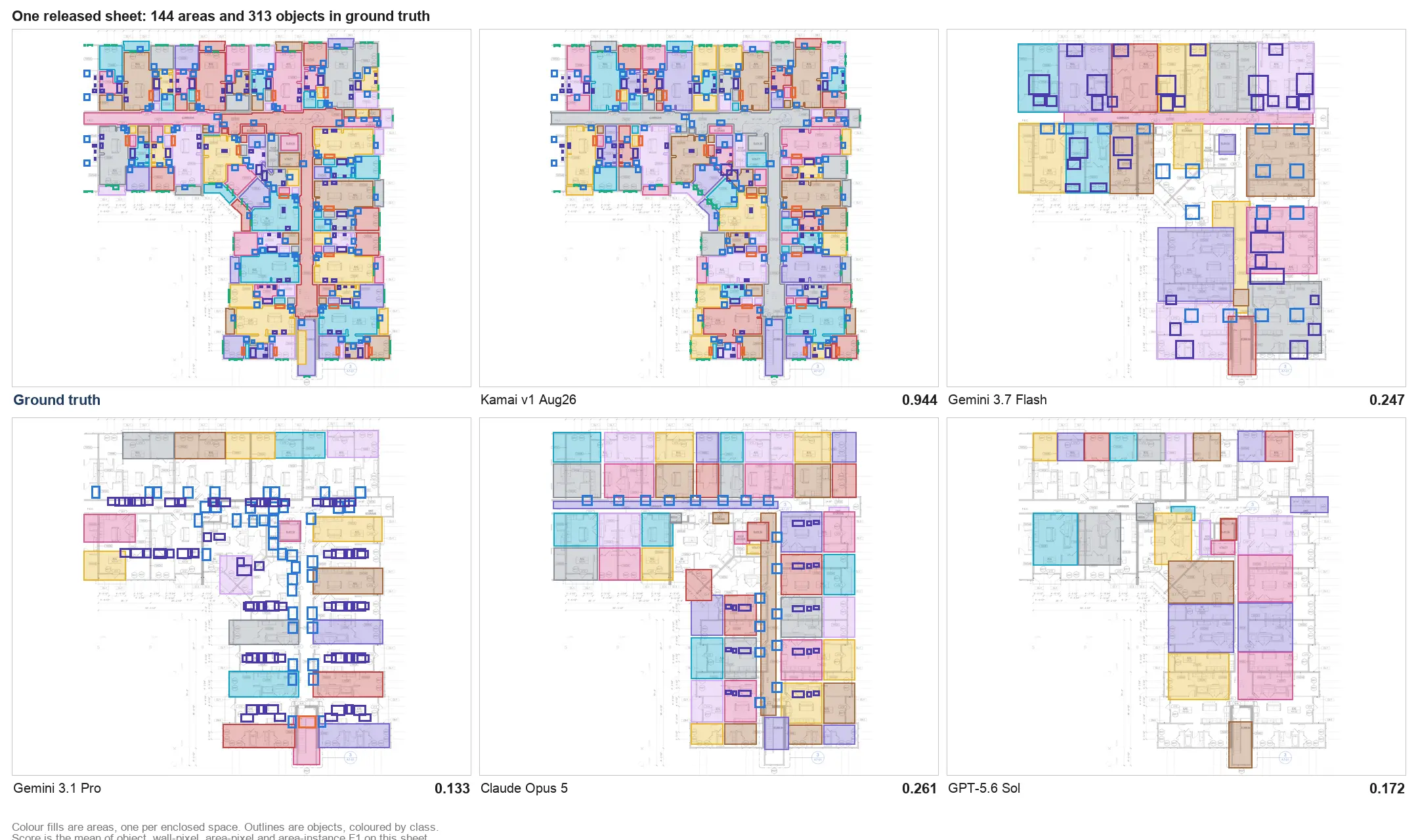
Kamai reads the drawings directly and extracts areas, volumes, materials, dimensions, and counts, and every quantity carries an audit trail back to the source sheet. That last part is the difference between a number you paste in and a number you can defend.
Speed without giving up accuracy
Manual takeoff is slow, and a revision means doing chunks of it again. Automation takes that burden off. When the drawings change, the quantities update, and the measurements stay consistent across the set.
What that gets a contractor:
- Faster workflows and faster bid turnaround, hours instead of days
- Fewer manual calculations
- Fewer transcription errors from re-keying
- More time for the parts that need judgment: scope, risk, pricing strategy
The net effect is more bids out the door with the same team. In a market where you have to submit more to win the same amount of work, that capacity is the whole game.
Better accuracy and tighter cost control
Even a strong estimator makes mistakes under a deadline, and a small error on a large project is not small in dollars. It becomes an overage, a shortage, or an overrun.
Automation applies the same measurement rules every time and calculates off the digital drawing instead of a hand trace. Consistent quantities, better visibility into what is actually there, and more confidence at the moment you set a price. That flows into cleaner material ordering, less waste, fewer surprise costs, and bids you can hold when the job is won.
One source of truth across the team
Preconstruction is never one person. Estimators, project managers, procurement, designers, and owners all need the same numbers, and they need to agree on which version is current.
A shared workspace where quantities, assumptions, and revisions are visible replaces the usual mess of emailing spreadsheets. Everyone works from the same set instead of three slightly different copies.
Standardized work that scales
When every estimator uses their own naming, methods, and formats, the outputs are hard to compare and harder to train new people on. Standardized processes, templates, and structured outputs fix that.
Once the outputs are consistent, they stop being one-off files and start being data.
That data is what you use later for benchmarking, forecasting, unit cost analysis, productivity tracking, and risk assessment. You cannot build any of that on quantities that were formatted five different ways.
Quantities that flow into estimating
A takeoff is only useful if you can price it. Moving numbers by hand from one system to the next is one of the biggest sources of error in the whole process.
Kamai extracts structured, typed data that flows into estimating platforms, spreadsheets, or an API without anyone rekeying it. The workflow looks like this:
- Takeoff completed, with quantities extracted and verified
- Structured data exported through files, integrations, or the API
- Pricing applied using your unit costs, assemblies, and markup
- Bid produced and audited, with every line referencing the source drawing
Less copy-paste, and traceability that holds from the finished bid all the way back to the sheet it came from.
Faster response to design changes
Drawings change. Addenda land, scope shifts, revisions come in the week before the bid is due. A manual workflow means rechecking a lot of sheets by hand to find what moved.
Automation identifies the differences between versions and recalculates the affected quantities. That lets a contractor evaluate alternatives faster, understand the cost impact right away, answer RFIs more efficiently, and keep the numbers accurate even when the deadline is tight.
Less risk when the schedule is compressed
Rushed jobs are where mistakes multiply: rushed measurements, skipped verification, assumptions nobody circles back on. Automation handles the repetitive measuring and surfaces conflicts before the estimate is final, so the estimator spends their attention on judgment, scope, and pricing instead of chasing symbols across the set.
The return over time
The cost of the software is far below the cost of repeated errors, rework, and bids you never got to submit. The return shows up as higher productivity, more bids out, fewer overruns, better win rates, and margin that actually gets protected. And the historical data you build along the way makes the next forecast sharper.
Why Kamai is different
A lot of takeoff tools work by analyzing an image of the drawing. Kamai does not rasterize the sheet into a picture. It reads the native vector geometry in the PDF or CAD file and computes from the drawing's own coordinates, not from pixels.
That means the models work with the actual geometry, scale, symbols, layers, annotations, cross-sheet references, and trade conventions the drawing was made with. Every quantity keeps its provenance, so you can open any number and see exactly which sheet and layer it came from.
The bottom line
Automated takeoff is becoming table stakes for teams that want to stay competitive. Generate accurate quantities quickly, keep everyone working from the same numbers, respond to revisions without starting over, and move it all into estimating without rekeying. Kamai turns a stack of blueprints into structured construction data, so estimators spend their time on decisions instead of measurements.
Frequently Asked Questions
What is automated takeoff software?
It extracts areas, lengths, volumes, counts, and other quantities directly from digital construction drawings, which cuts out the manual measurement step.
How does it improve accuracy?
It applies consistent measurement rules and calculates from the digital drawing, which minimizes human error and reduces incorrect quantities.
Can it handle revisions?
Yes. It detects changes between drawing versions and updates the affected quantities faster than a manual recheck.
What quantities can be extracted?
Floor areas, wall lengths, concrete volumes, fixture counts, electrical devices, pipe runs, and material quantities, among others.
How does Kamai differ from traditional takeoff tools?
Kamai reads native drawing geometry, scale, symbols, and annotations directly instead of analyzing an image, and produces structured, traceable quantity data.
Get the next post in your inbox.
Low frequency. High signal.