Digital Takeoff vs Manual Estimating: Which Is Better?
Manual estimating gives you control; digital takeoff gives you speed and traceability. Here is how the two compare, and where Kamai fits.

Every bid, budget, material order, and schedule starts the same way: someone has to figure out how much work the drawings actually describe. For decades that meant a printed set, a scale ruler, a spreadsheet, and a lot of hours. It worked. It still works on the right job. But the projects have gotten bigger and the deadlines have gotten shorter, and the manual method has not gotten any faster.
Digital takeoff changed the math. Instead of measuring every wall and retyping every quantity, you upload the drawings and let software pull the numbers off them. The question most estimators are actually asking is not "which is better in theory" but "where is the line, and which side of it is my work on." Here is how the two compare, and where a tool like Kamai changes the answer.
What a takeoff actually is
Before comparing methods, it helps to be precise about the thing itself. A takeoff is the process of measuring and counting everything a project needs: floor areas, wall lengths, concrete volumes, fixture counts, pipe runs, ceiling measurements, doors, windows, and the rest. Those quantities are the foundation of the estimate. Pricing gets applied on top of them.
Get the takeoff wrong and it does not matter how good your pricing database is. The bid is wrong before anyone opens the cost book.
What manual estimating looks like
Manual estimating follows the traditional workflow. You review the plans, confirm the drawing scale, measure lengths and areas by hand, count the elements, and transfer everything into a spreadsheet or an estimating template.
Done well, it gives an experienced estimator complete control over every measurement. Nothing happens that you did not do yourself, which is exactly why a lot of estimators trust it. The cost is time and attention. For a small residential job or a simple renovation, that cost is manageable. As the set grows, the workload grows with it, and consistency gets harder to hold. Every quantity is measured and keyed by hand, so every quantity is another chance for a transcription error.
What digital takeoff looks like
Digital takeoff replaces the manual measurement step with software that reads the drawings and produces measurable quantities directly. Instead of tracing every room, you upload the set and let the tool do the repetitive work, then review what comes back.
The good tools do more than measure faster. They organize the output into structured quantities that flow into the rest of your estimating workflow instead of sitting in a one-off spreadsheet. Kamai takes this further than most by treating construction drawings as construction drawings, not as generic images.
Where Kamai works differently
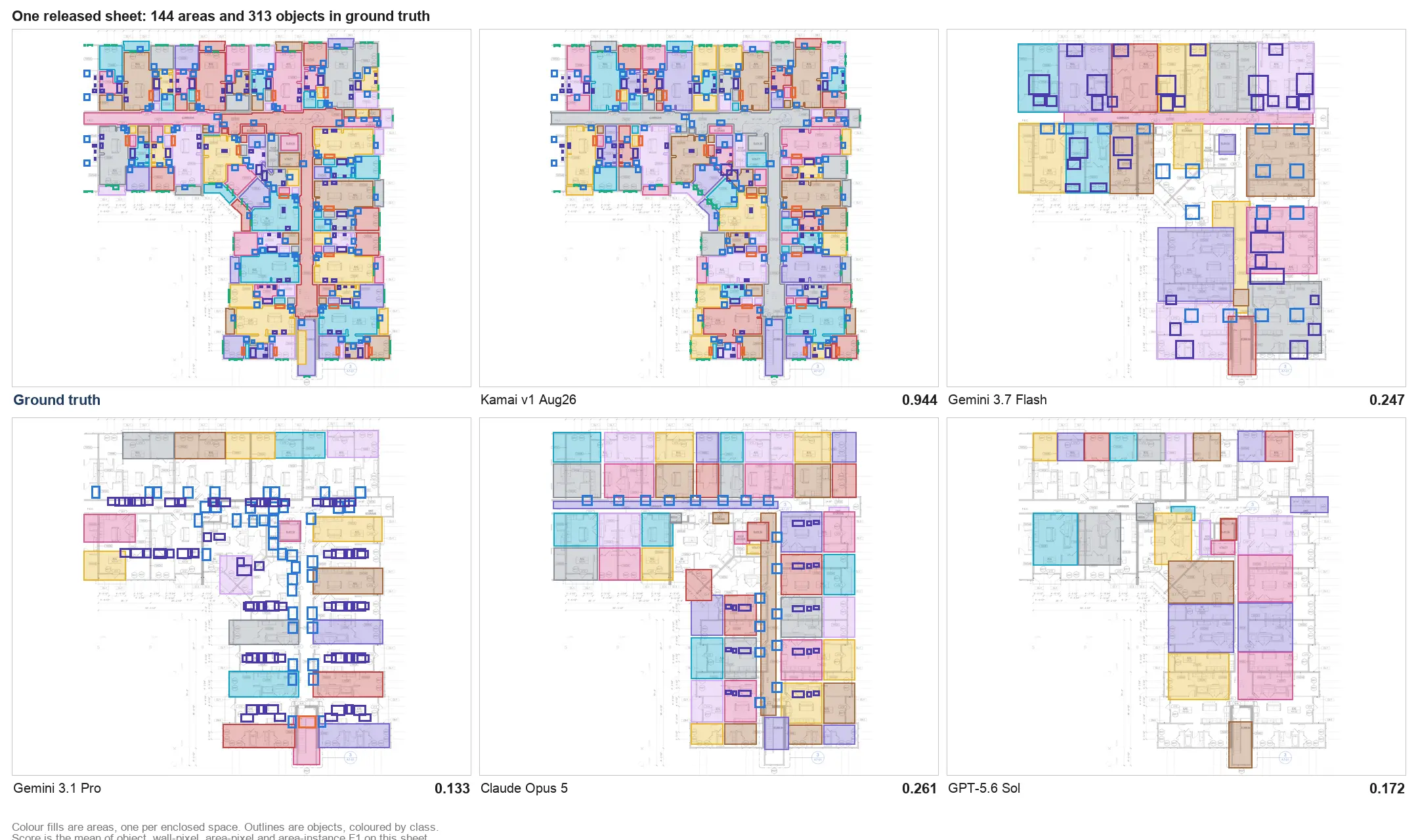
A lot of digital takeoff platforms are built on computer vision. They rasterize the PDF into an image first, then analyze pixels to guess at dimensions and detect objects. It works, but it is an approximation, and approximations drift.
Kamai reads the native geometry stored inside the PDF and CAD files. Lines stay lines, text stays text, and the scale information carries through the whole workflow. Measurements come from the drawing's own coordinates instead of from pixels, so every quantity traces back to the exact sheet and layer it came from. That provenance is the part manual spreadsheets never had: you can always see where a number originated.
Because the models are built for architectural and engineering documentation rather than photographs, they work across electrical, plumbing, structural, and interior finishes without project-specific training.
Comparing the everyday workflow
The real difference shows up in the day-to-day, not the sales sheet.
Manual estimating means measuring, recording, verifying, and re-transferring the same information between drawings and spreadsheets. Every revision means re-checking, and collaboration usually means several versions of the same files floating around.
Digital takeoff keeps the quantities attached to the drawings. Kamai turns the drawing set into structured data that plugs into estimating systems, spreadsheets, and APIs, so there is less re-keying and more confidence in the numbers.
Accuracy matters more than speed
Most contractors reach for digital tools to save time, and they do. But accuracy is usually the bigger prize. A wrong quantity is not a minor annoyance; it turns into material shortages, over-ordering, budget overruns, or a bid that loses because it was padded to cover the uncertainty.
Kamai computes measurements from the vector geometry in the native files, so dimensional accuracy is bounded by the precision of the drawing itself rather than by how cleanly an image rendered. And because every extracted quantity carries provenance, you can trace it back to the sheet, layer, and geometry it came from. That is a check manual methods cannot offer at all.
Fewer places to rekey data
Some of the most expensive estimating errors happen after the takeoff is done, when numbers get copied from one system into another before pricing. Every manual transfer is another chance to fat-finger a value.
Kamai cuts most of that out by producing structured output that drops straight into estimating software, cost databases, spreadsheet templates, and project management platforms. Your pricing process does not change. The quantities just arrive already structured and ready to price.
Built for the big sets
Manual estimating gets harder to scale as projects grow. A large commercial development can run thousands of sheets across multiple disciplines, and no one wants to measure that by hand under a deadline.
Kamai is built to handle extensive sheet sets while keeping cross-sheet references connected, so you can work through an entire drawing package instead of isolated sheets. The same structured pipeline applies whether the set is electrical, plumbing, interior finishes, or structural.
So which is better?
Manual estimating still earns its place on small projects and light workloads, where the control is worth the hours. But if you are managing multiple bids, complex drawing sets, or tight deadlines, digital takeoff has become the practical standard, and the advantage is more than raw speed.
The point is not to replace the estimator. It is to stop paying an experienced professional to be a measuring-and-transcription service, so they spend their time on the judgment calls that actually win bids. Upload the set once, get structured and traceable quantities back, and price with numbers that hold up when the job is won.
Frequently Asked Questions
What is the difference between digital takeoff and manual estimating?
Manual estimating relies on measuring drawings by hand and entering quantities into spreadsheets. Digital takeoff software extracts those measurements from the drawings automatically and returns them as structured data ready for pricing.
Why is Kamai more accurate than image-based takeoff tools?
Kamai reads the native geometry inside PDF and CAD files instead of converting drawings into images. Measurements come from the drawing's actual coordinates rather than being estimated from pixels, and every quantity traces back to its source sheet and layer.
Can Kamai handle large drawing sets?
Yes. Kamai is built for projects ranging from single-sheet plans to multi-thousand-page sets, keeping cross-sheet references connected so you can analyze the whole package rather than one sheet at a time.
Does Kamai integrate with estimating software?
Yes. Kamai produces structured quantities that export or integrate into estimating platforms, spreadsheets, and APIs without manual rekeying. Your pricing stays in the tools you already use.
Is manual estimating still worth doing?
For simple residential jobs or occasional work, manual estimating can still be the right call. For larger projects, multiple bids, or complex sets, digital takeoff usually wins on both speed and accuracy.
Get the next post in your inbox.
Low frequency. High signal.